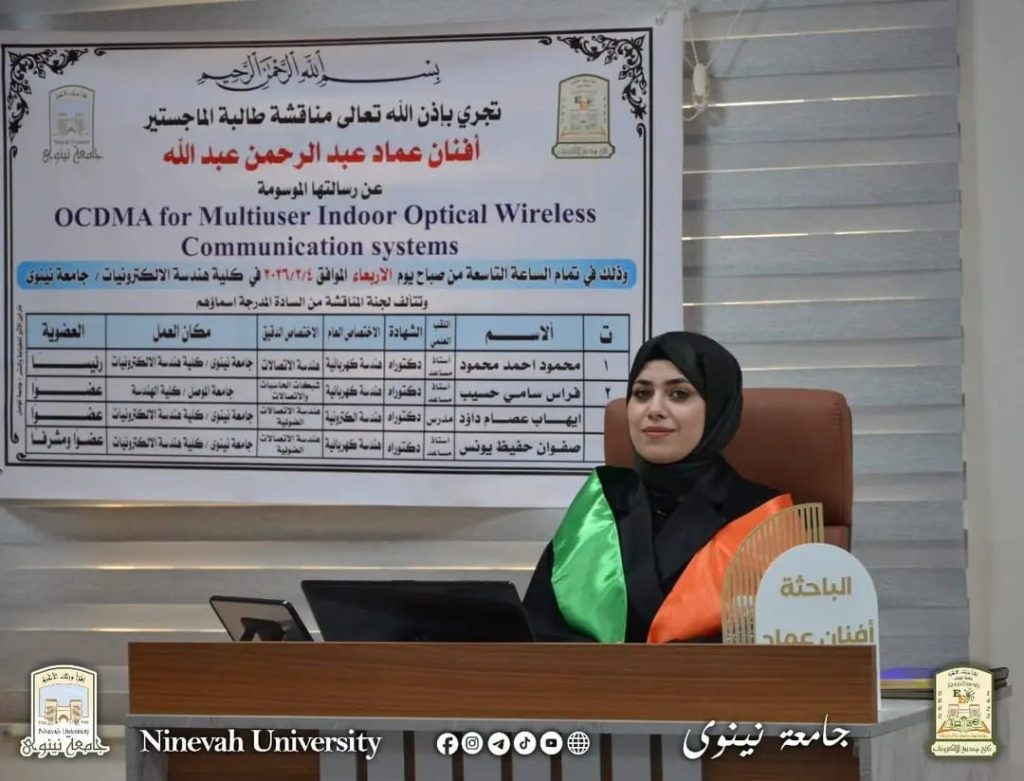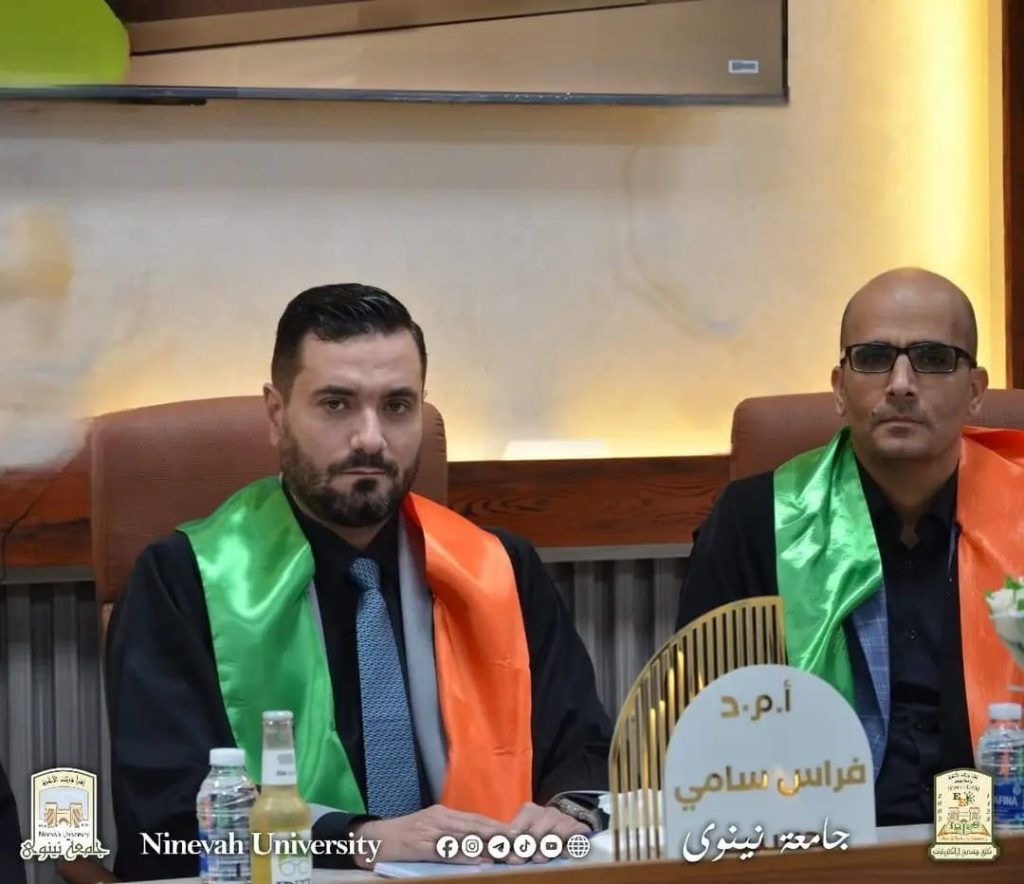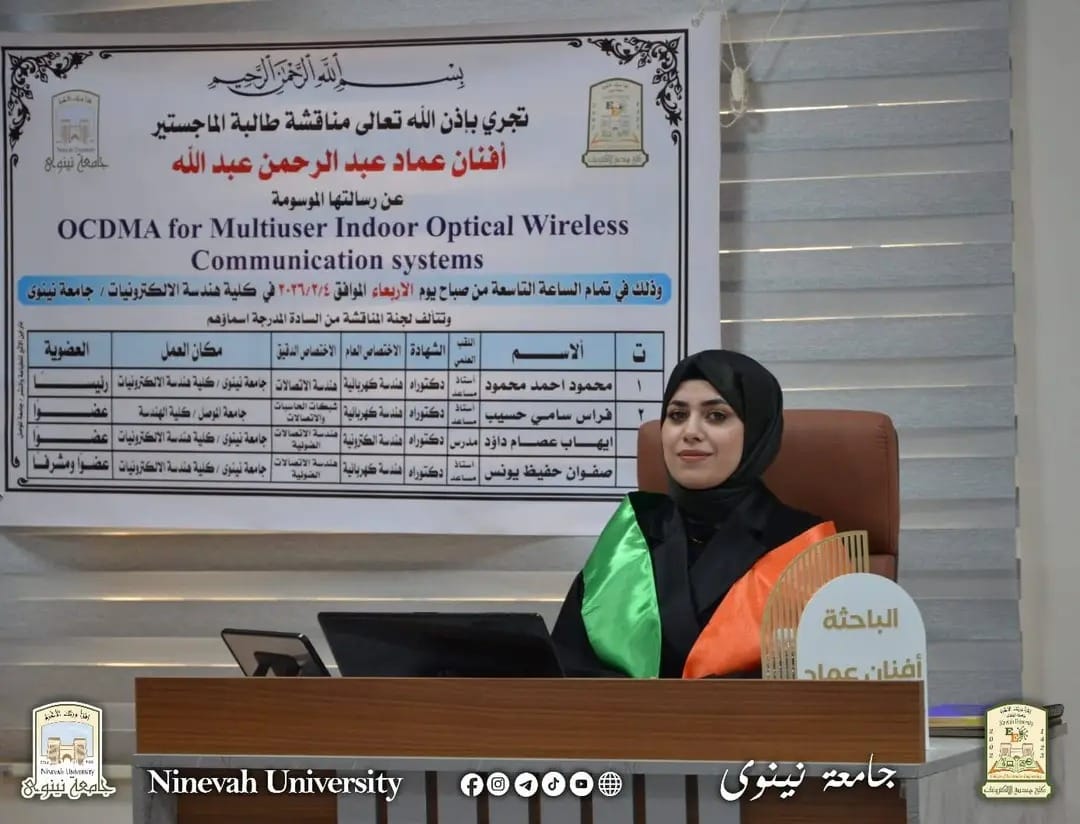
A master’s thesis was discussed at the University of Ninevah / College of Electronics Engineering / Department of Communications Engineering by the student Afnan Imad Abdulrahman on Wednesday, 04/02/2026, entitled:
Optical Code Division Multiple Access (OCDMA) for Multiuser Indoor Optical Wireless Communication Systems
Serving many users simultaneously is one of the main challenges in indoor optical wireless communication technologies (infrared or visible light communication). This is because the optical receiver responds to any received optical signal, resulting in multiuser interference and consequently degrading the performance of the communication system. Optical Code Division Multiple Access (OCDMA) is considered one of the promising techniques for enabling multiuser access in indoor optical wireless communication systems.
OCDMA technology relies on assigning different optical codes to users, enabling multiuser operation in indoor visible light communication systems. In this thesis, this technique was employed to implement the system, where code orthogonality is essential to reduce interference and improve performance. However, reflections within indoor environments cause signal spreading at the receiver, generating code errors that consequently reduce the number of supported users. This thesis evaluates the impact of the cross-correlation factor resulting from reflections on the number of users in visible light communication systems, taking noise and mobility into account.
A new channel model was proposed that effectively integrates the cross-correlation factor to calculate code interference resulting from multipath propagation in multiuser systems. The effect of cross-correlation has largely been neglected in previous studies.
The results demonstrate that increasing the cross-correlation factor reduces the number of supported users at specified data rates. The results also indicate that controlling the cross-correlation factor is crucial for maintaining code orthogonality, allowing the addition of five more users at a target Signal-to-Interference-plus-Noise Ratio (SINR) of 13.6 dB compared with conventional models that ignore this parameter.
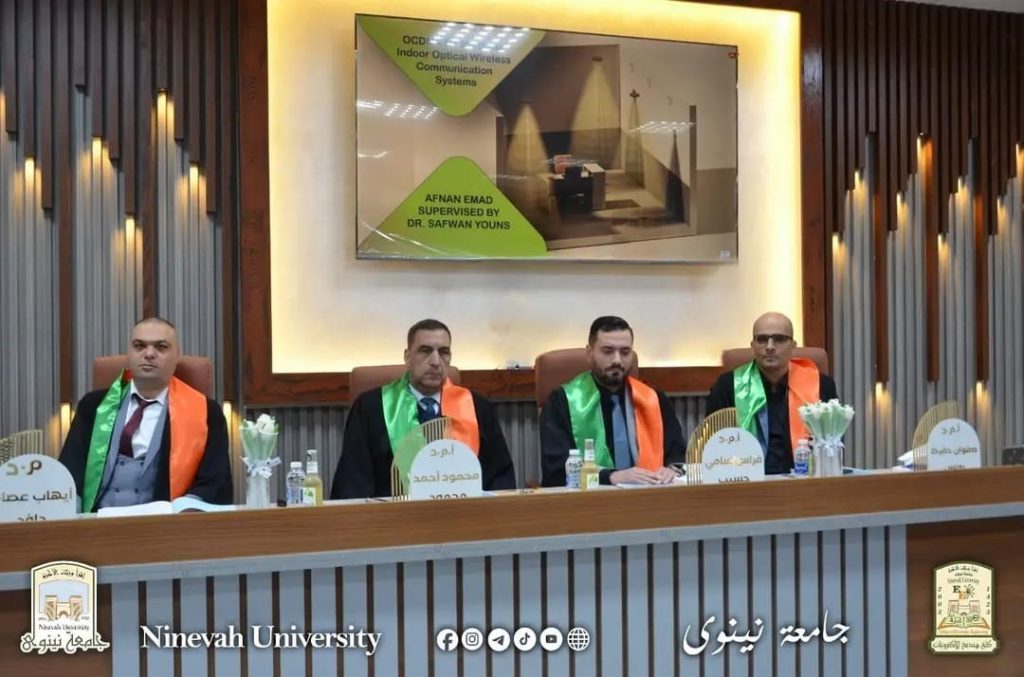
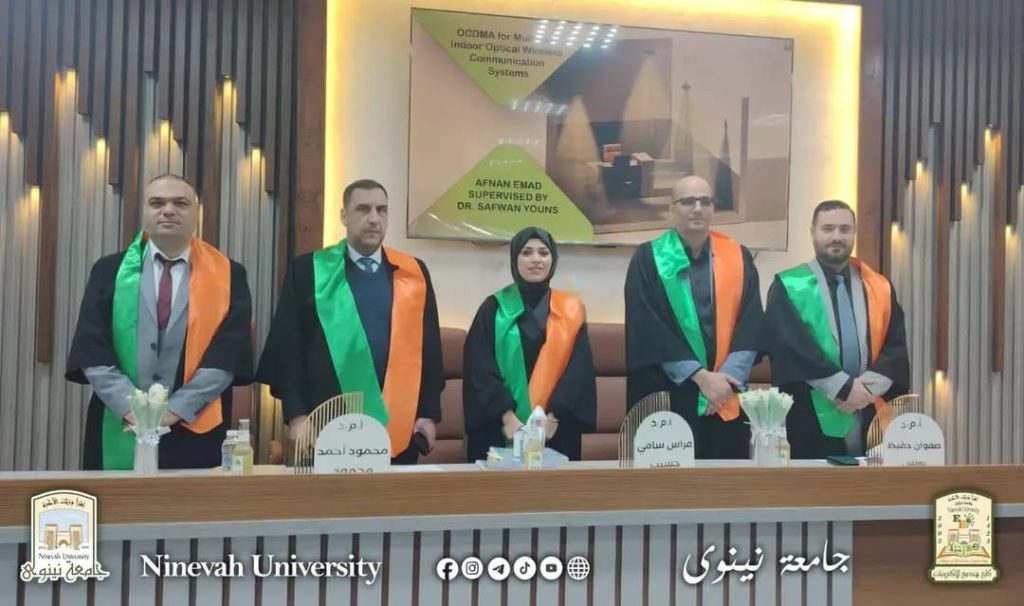
The examination committee consisted of:
1. Asst. Prof. Dr. Mahmoud Ahmed Mahmoud – University of Ninevah / College of Electronics Engineering (Chair).
2. Asst. Prof. Dr. Firas Sami Haseeb – University of Mosul / College of Engineering (Member).
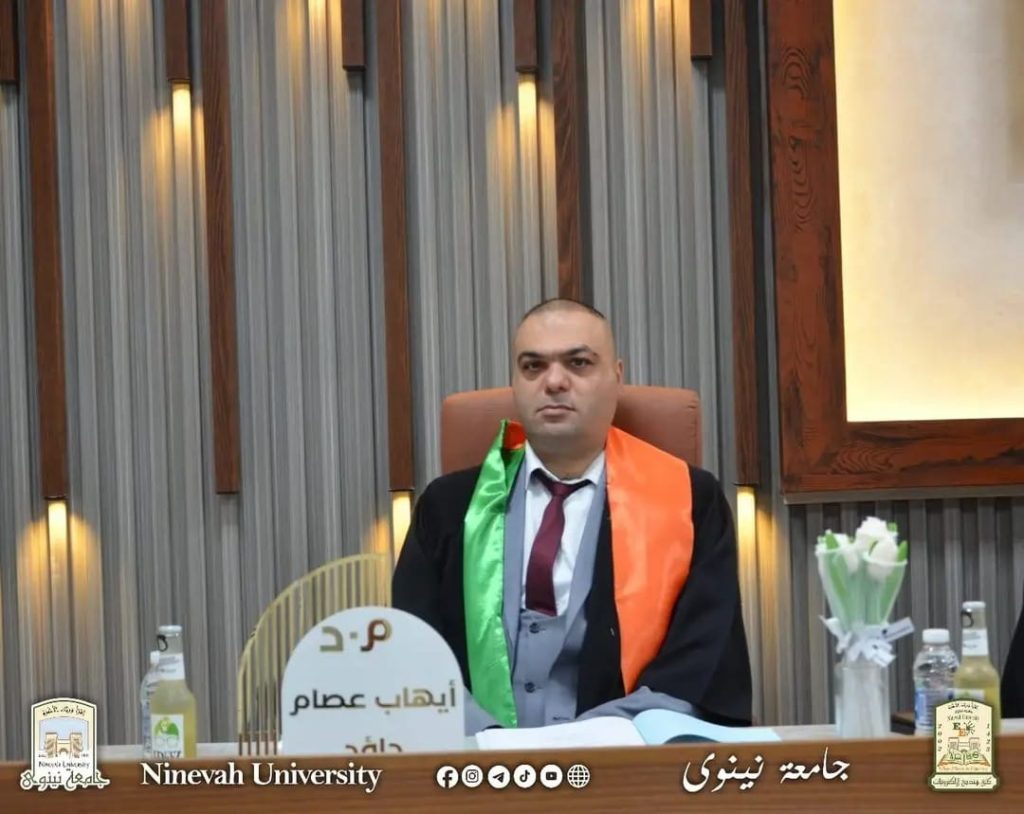
3. Lect. Dr. Ihab Essam Dawood – University of Ninevah / College of Electronics Engineering (Member).
4. Asst. Prof. Dr. Safwan Hafiz Younis – University of Ninevah / College of Electronics Engineering (Member and Supervisor).
Best wishes to the researcher and the examination committee for continued success.