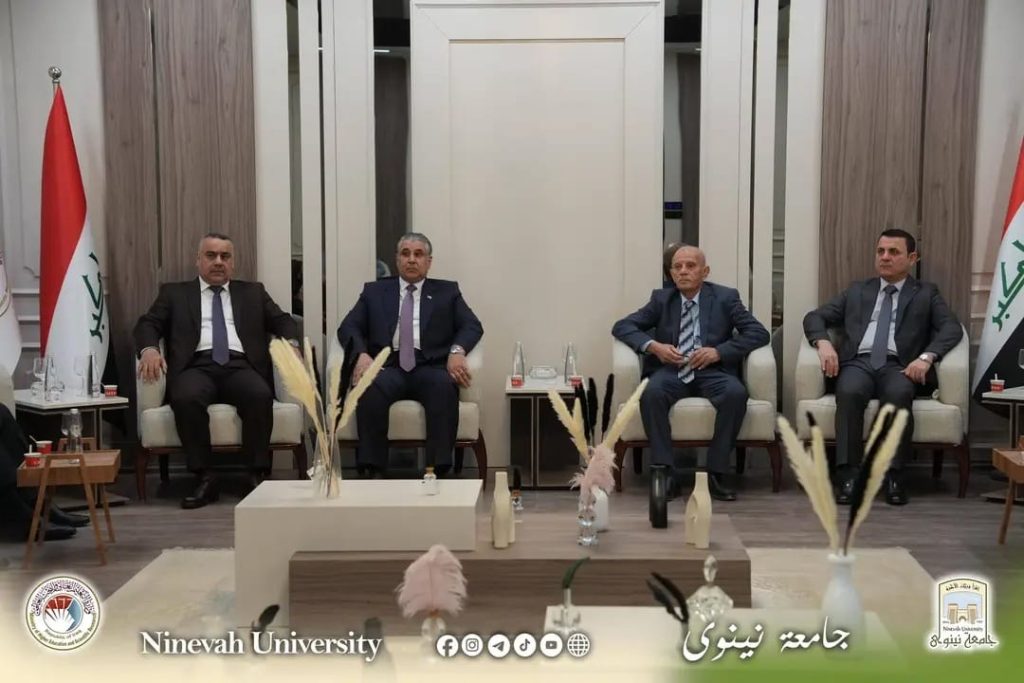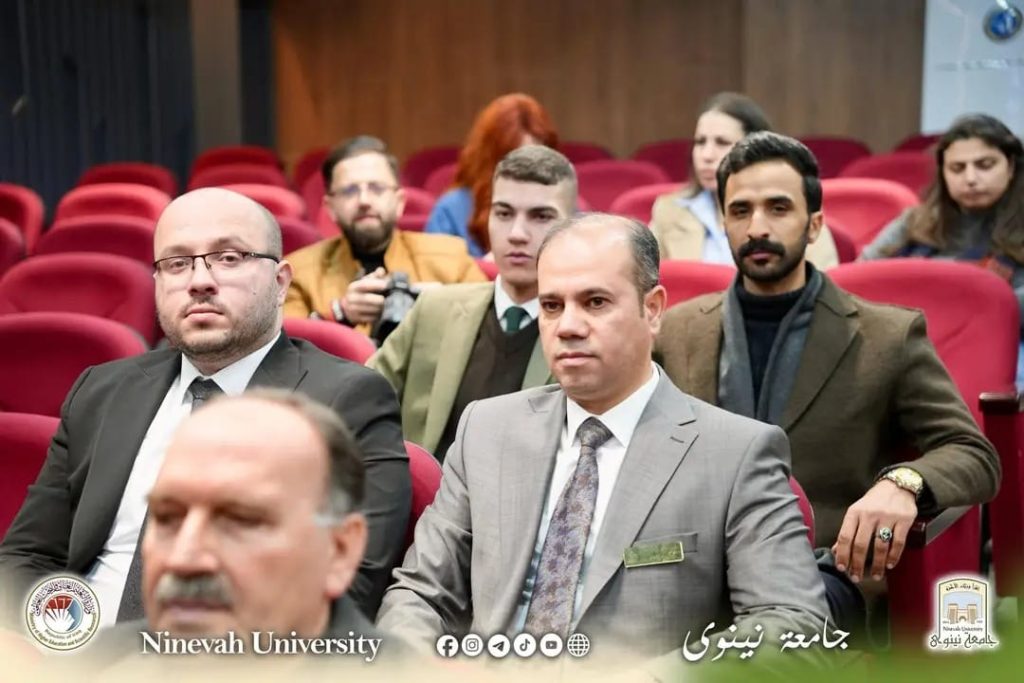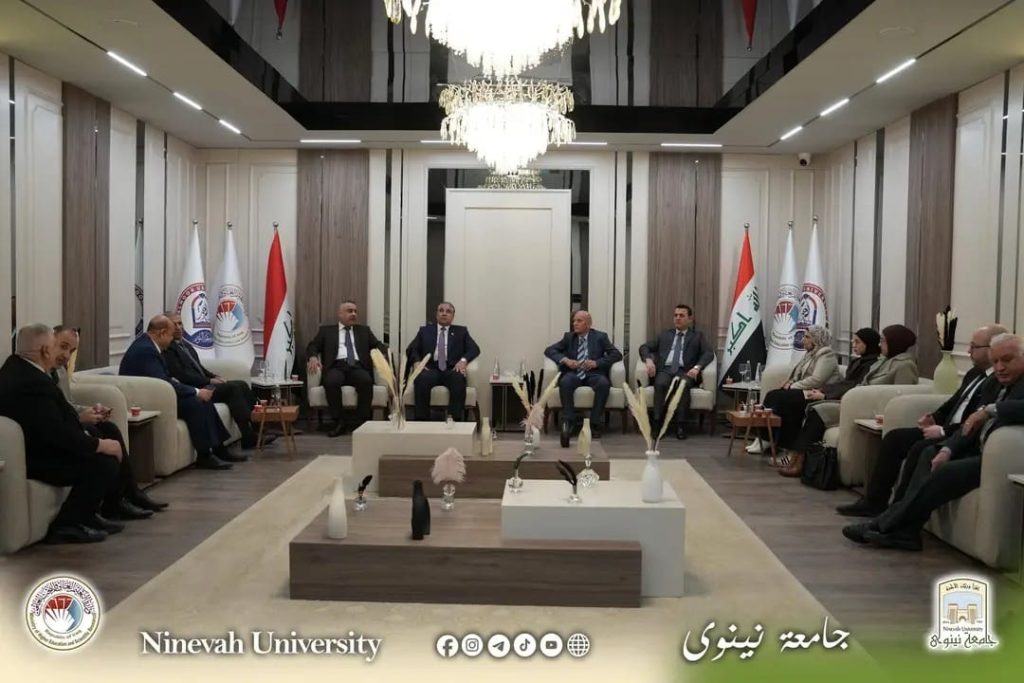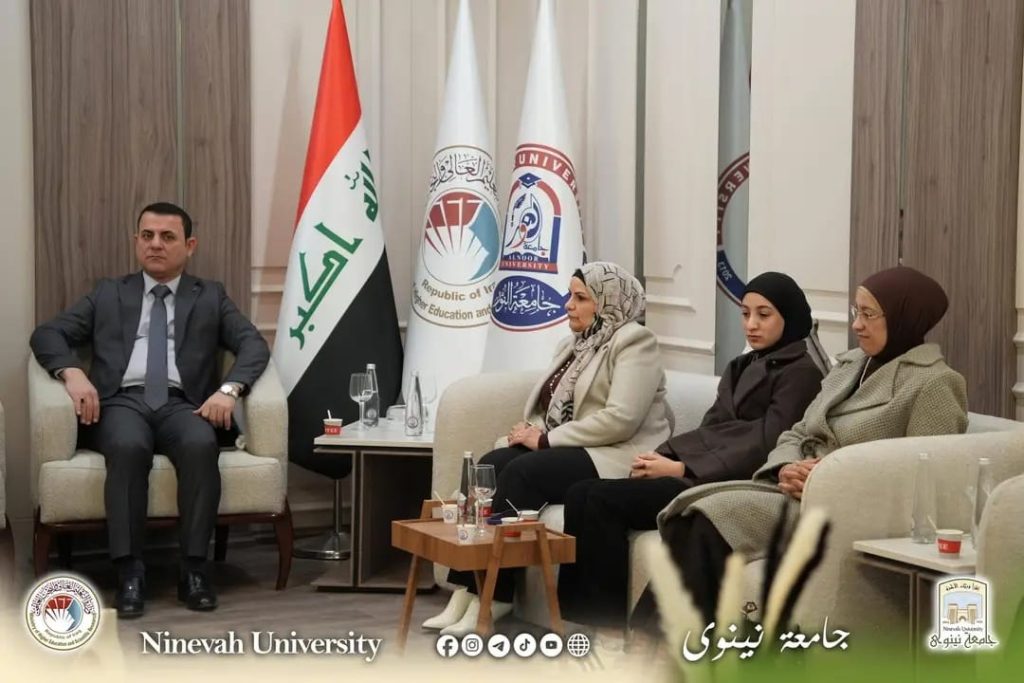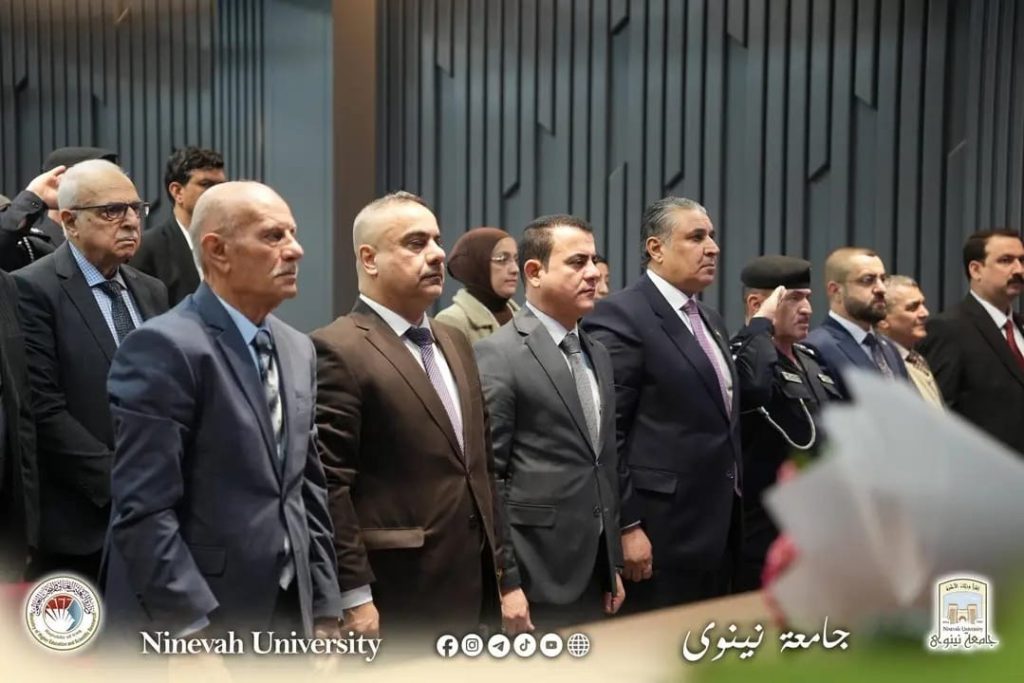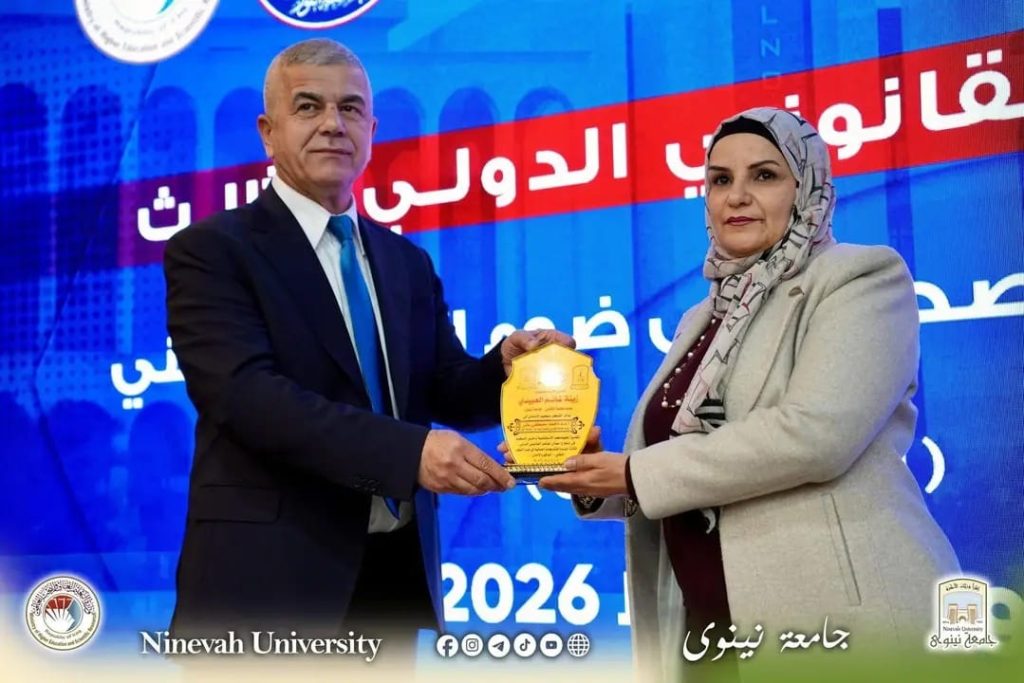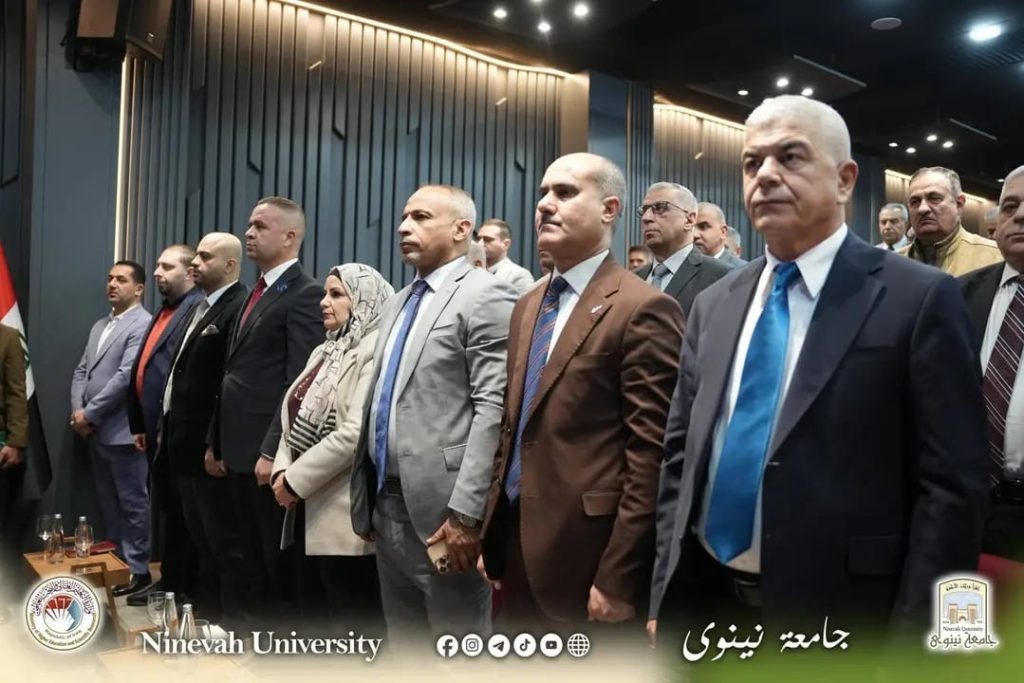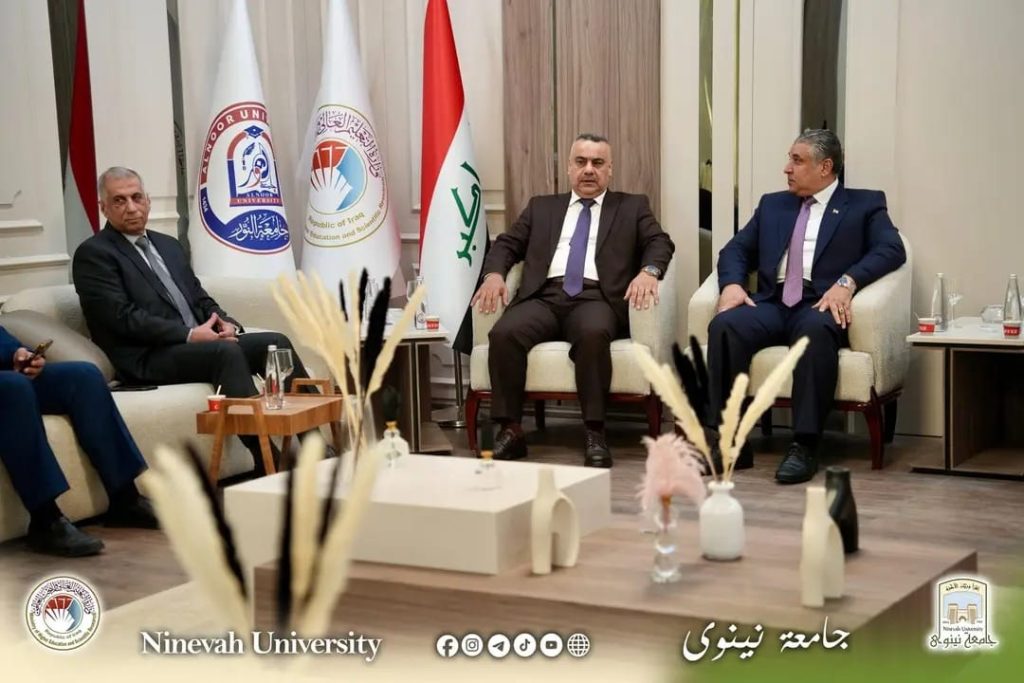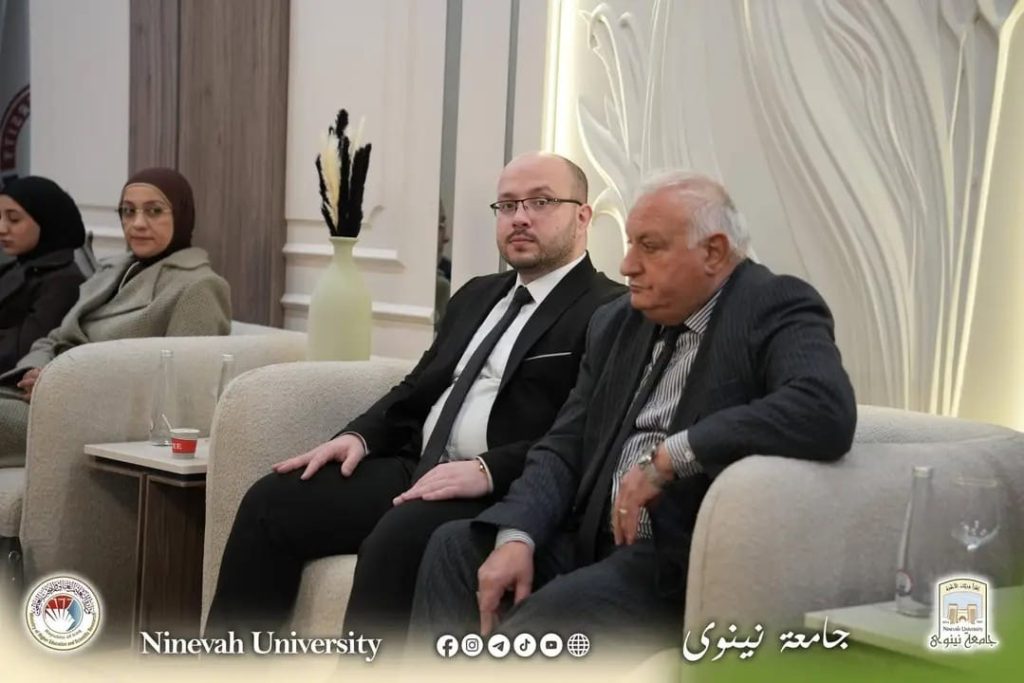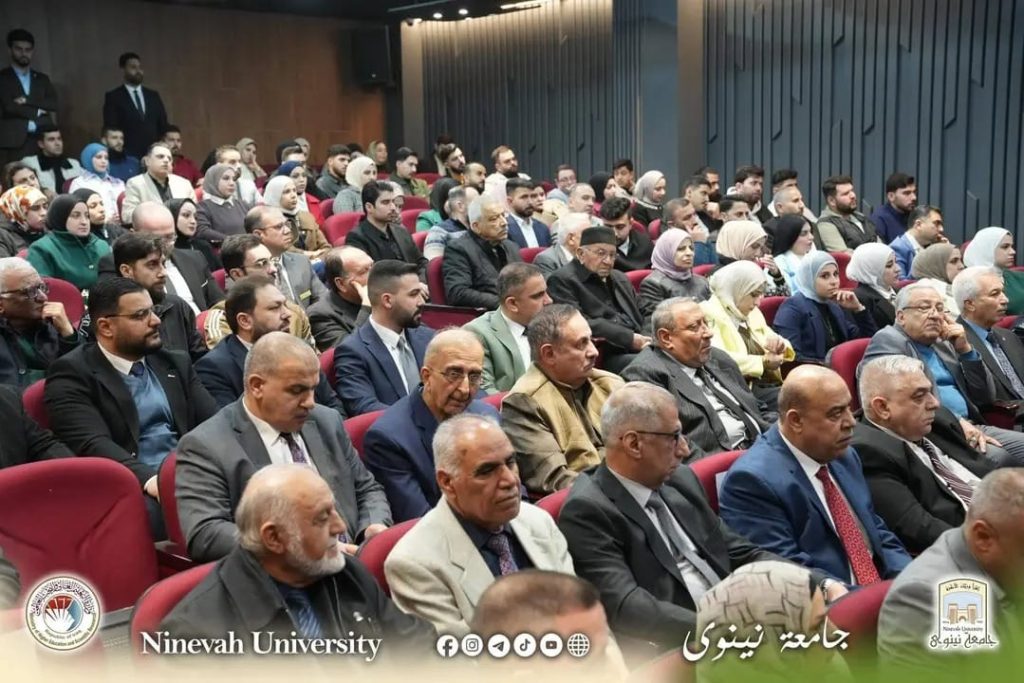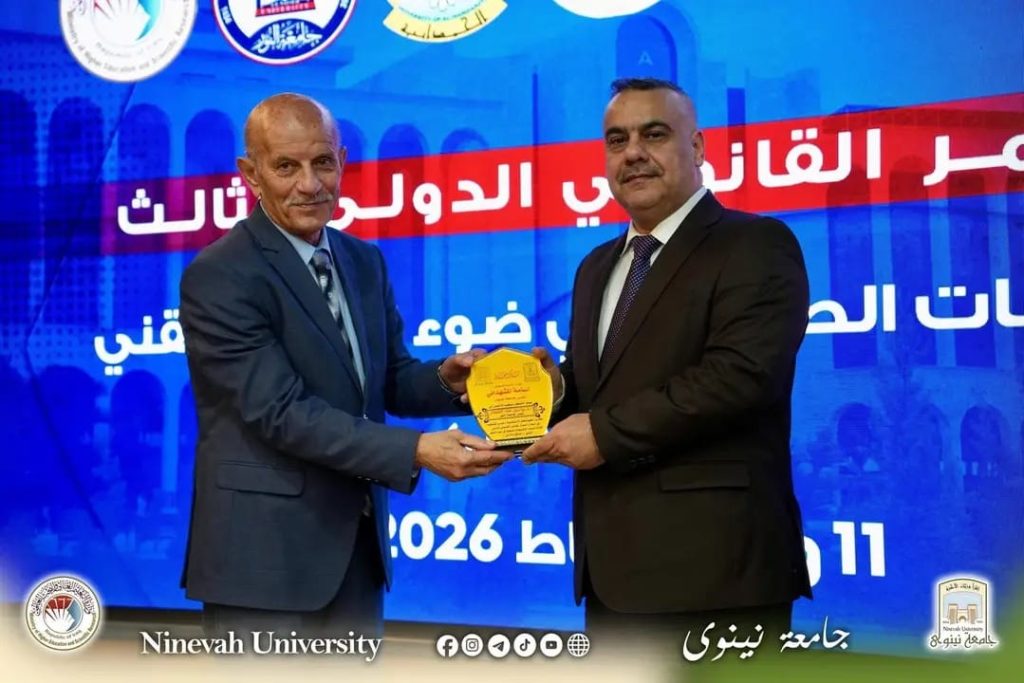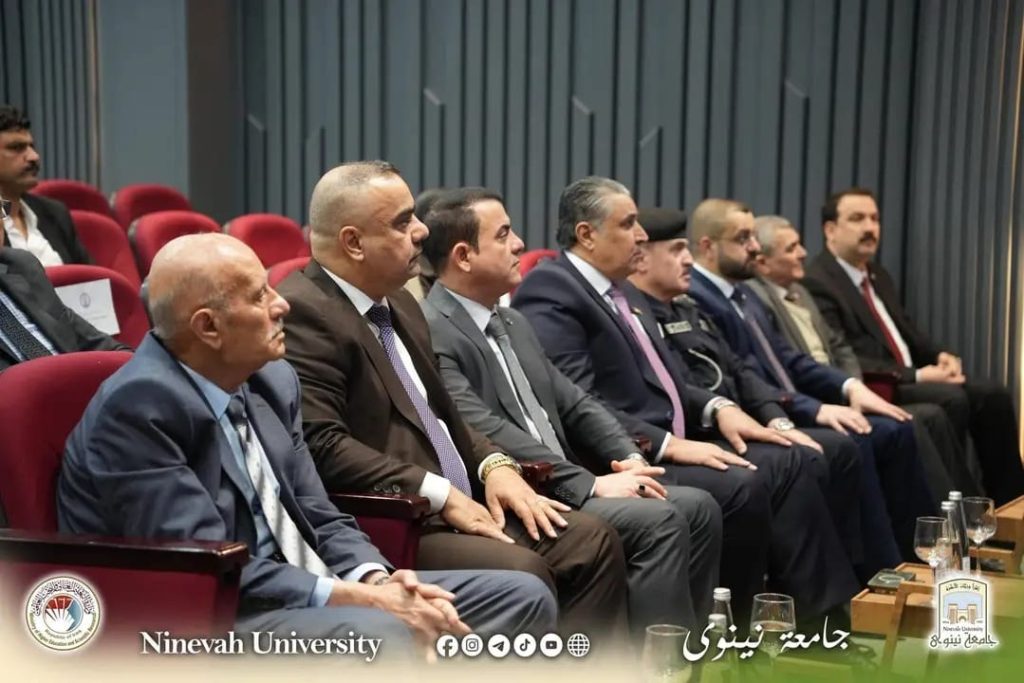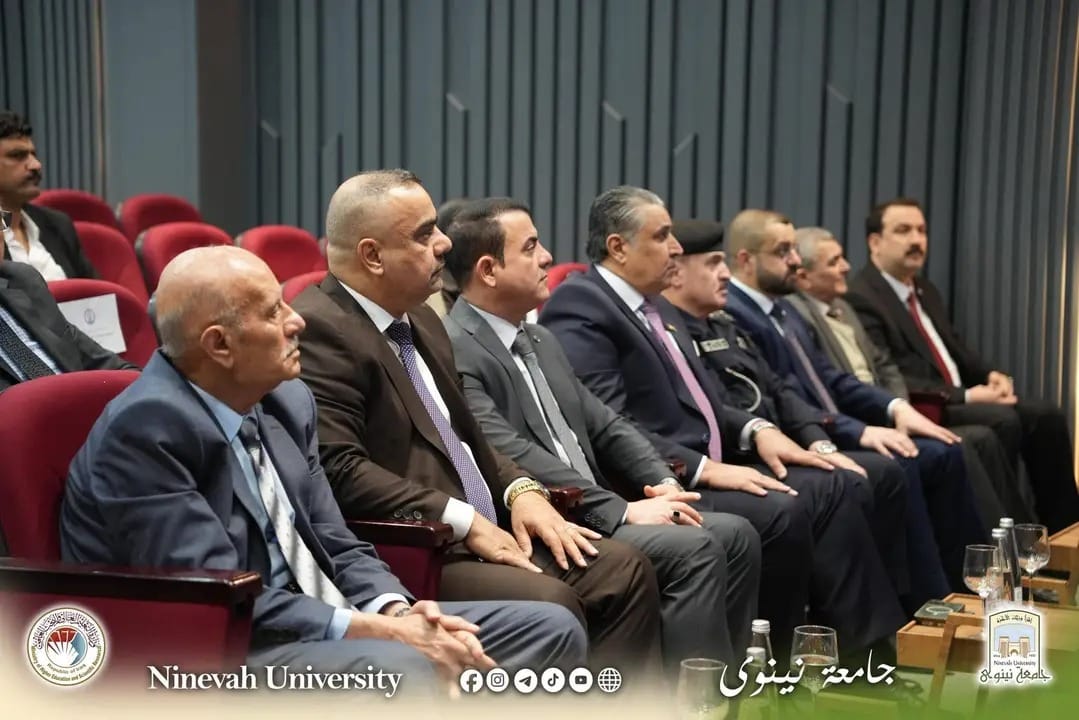
The President of the University of Ninevah, Professor Dr. Osama Al-Mashhadani, participated in the opening of the Third International Legal Conference organized by the College of Law and Political Science at Al-Noor University on Wednesday morning, 11 February 2026, under the patronage of His Excellency the Minister of Higher Education and Scientific Research, and in the presence of prominent academic leaders, official figures, and civil personalities from Nineveh Province.
The opening session was attended by Professor Dr. Yaseen Taha Al-Hajjar, President of Al-Noor University; Professor Dr. Nashat Mubarak, President of Al-Hamdaniya University; Mr. Mohammed Al-Jubouri, First Deputy Chairman of the Nineveh Provincial Council; in addition to several college deans, advisors, and academics. The conference also witnessed participation from the Universities of Mosul, Nineveh, Al-Hamdaniya, and Al-Hadbaa under the title:
“Health Legislation in Light of Technological Development.”
The College of Law at the University of Ninevah also took part in the conference activities, with the attendance of the Dean of the College, Professor Dr. Zeina Ghanem Al-Obaidi, affirming the college’s academic role in supporting contemporary legal dialogue and contributing to discussions on legislative issues related to rapid technological transformations and their impact on both health and legal systems.
The opening session included official speeches emphasizing the importance of developing legislation in line with technological advancement, in addition to an introductory presentation about Al-Noor University and the delivery of the conference’s keynote research by Professor Dr. Akram Mahmoud Al-Badoo, Head of the Scientific Promotions Committee at the University of Mosul.
The participation of the University of Ninevah in this important academic event aligns with its commitment to strengthening academic cooperation among Iraqi universities and engaging in specialized conferences that contribute to the development of scientific research and the exchange of expertise, thereby supporting its role in serving society and fostering a solid scientific environment that keeps pace with modern legislative and knowledge developments.