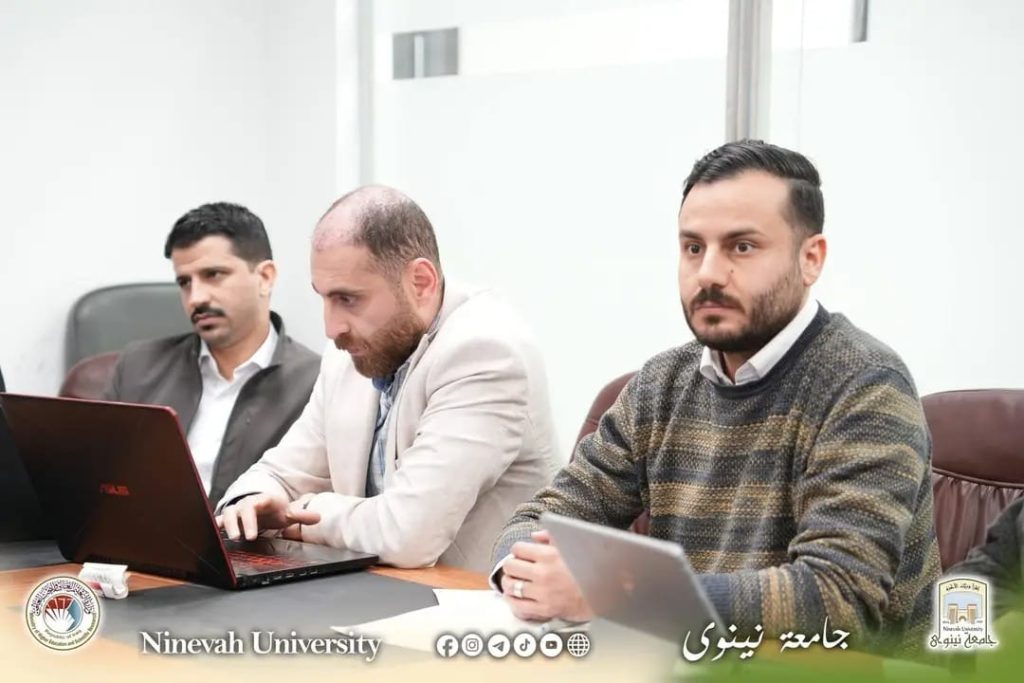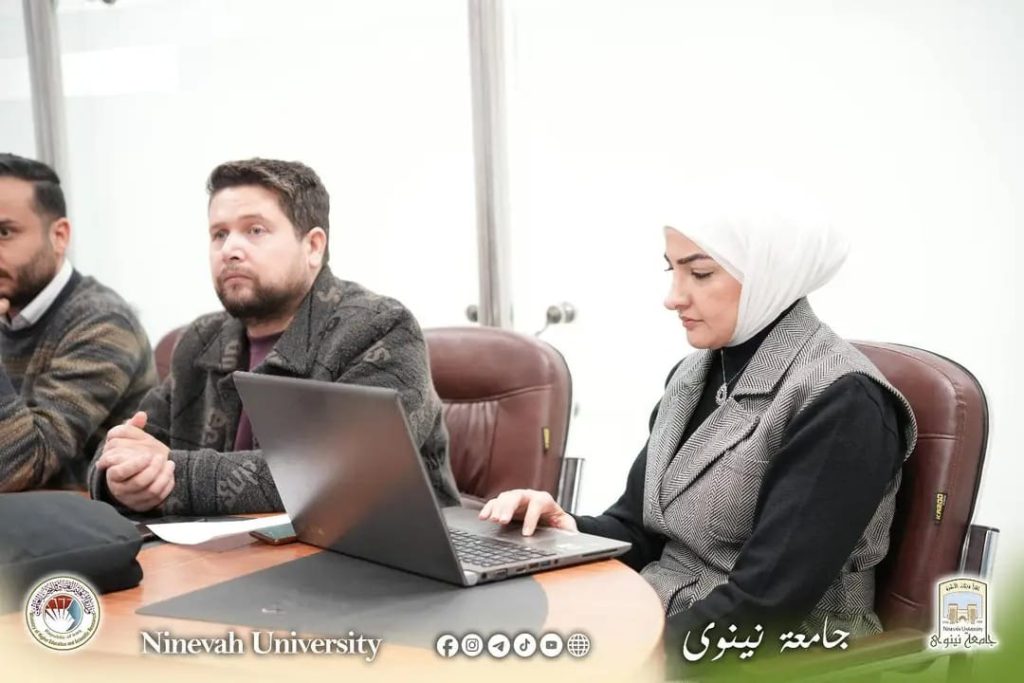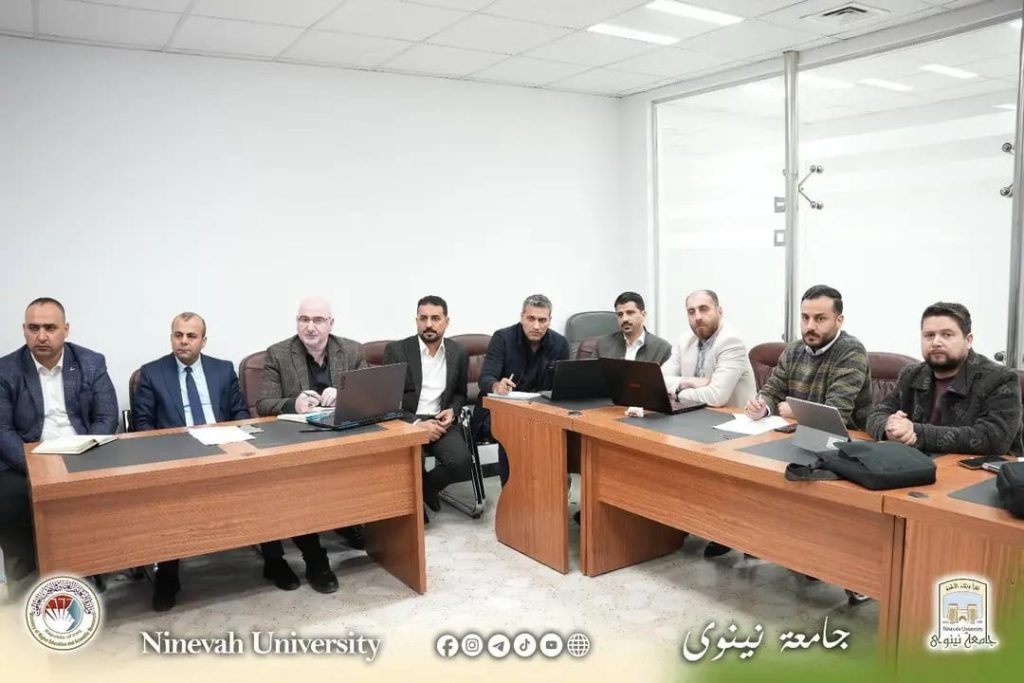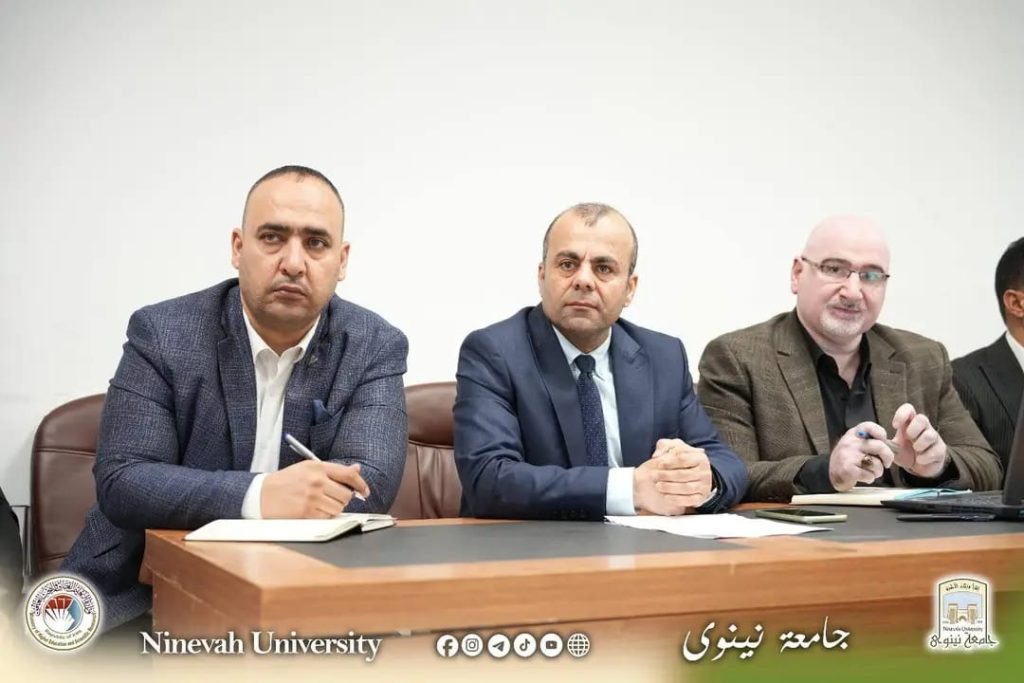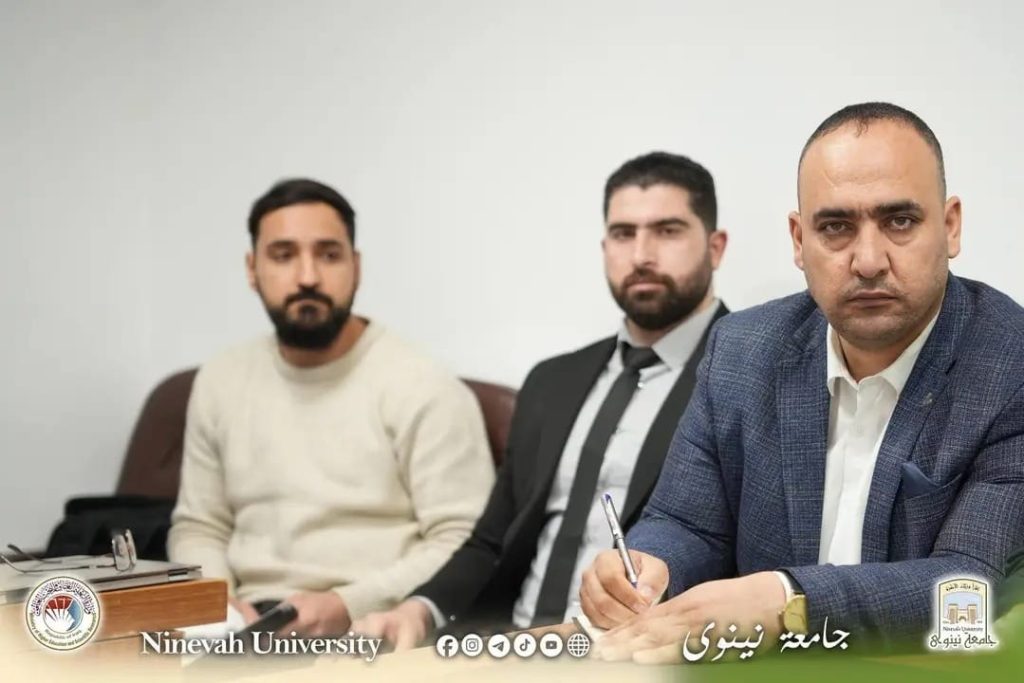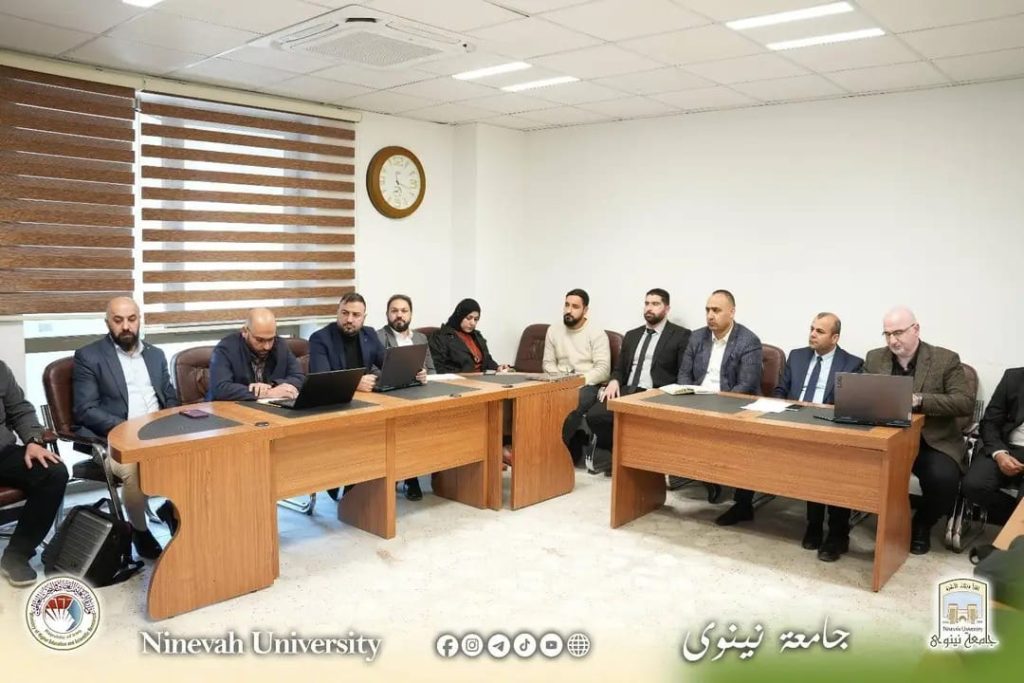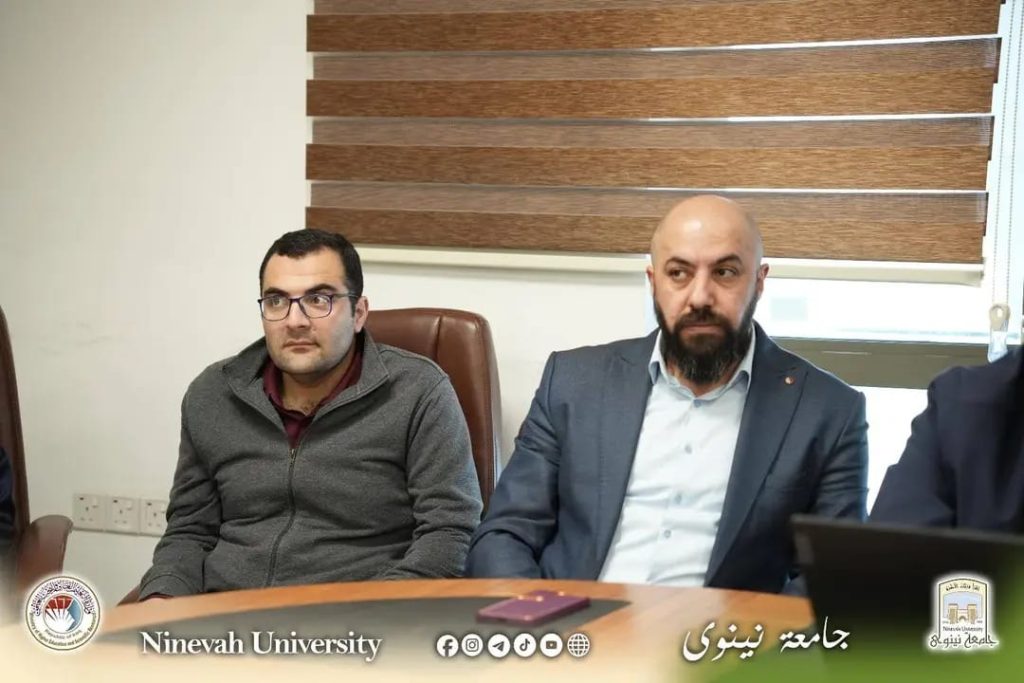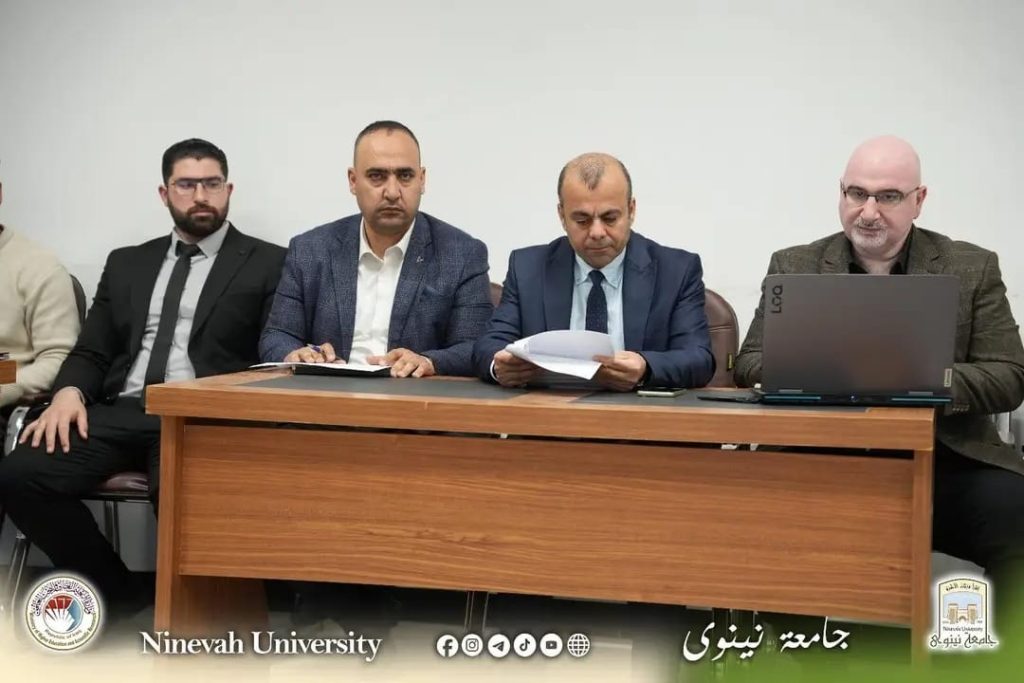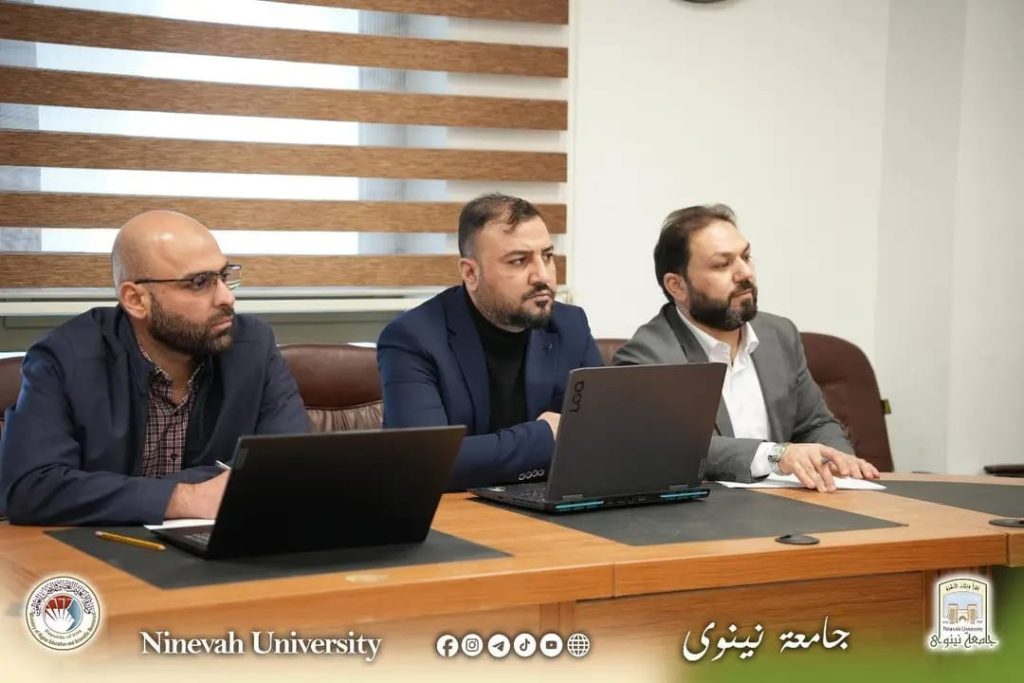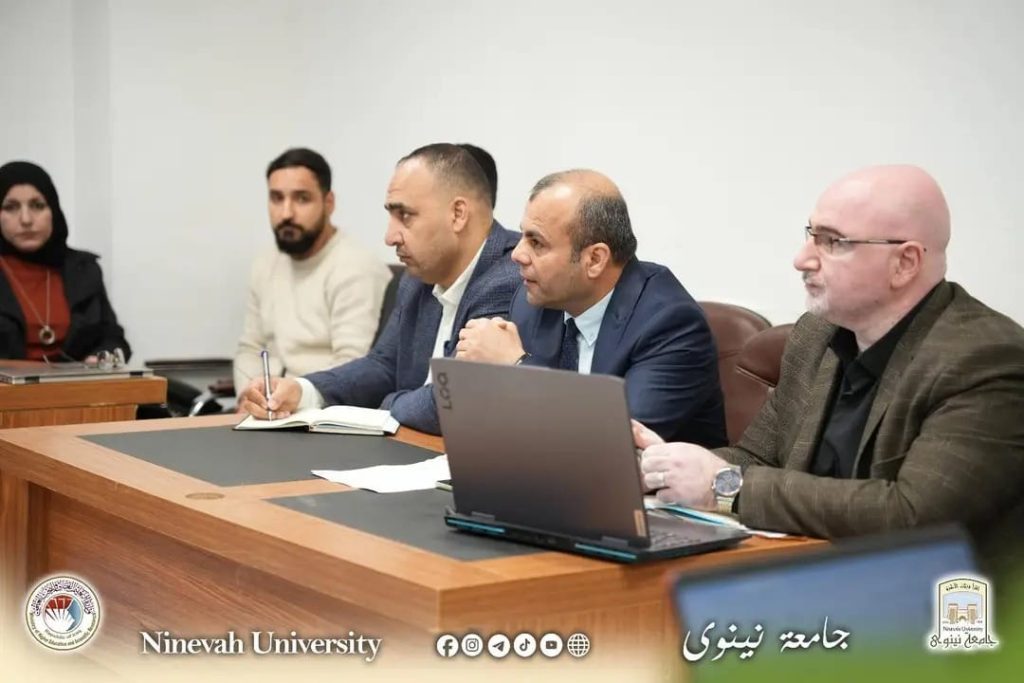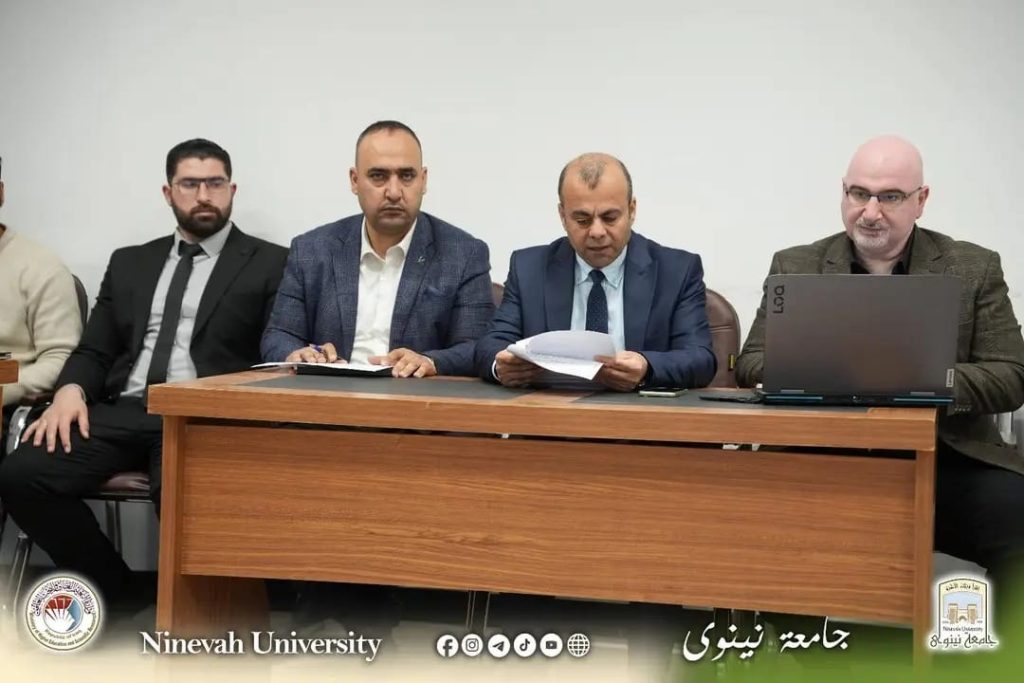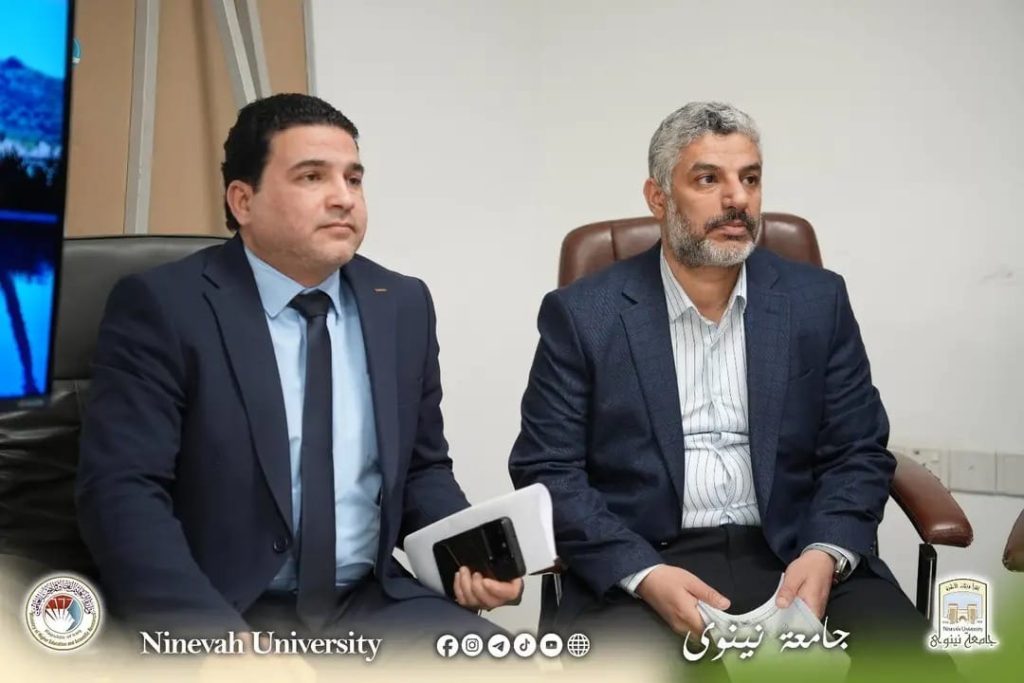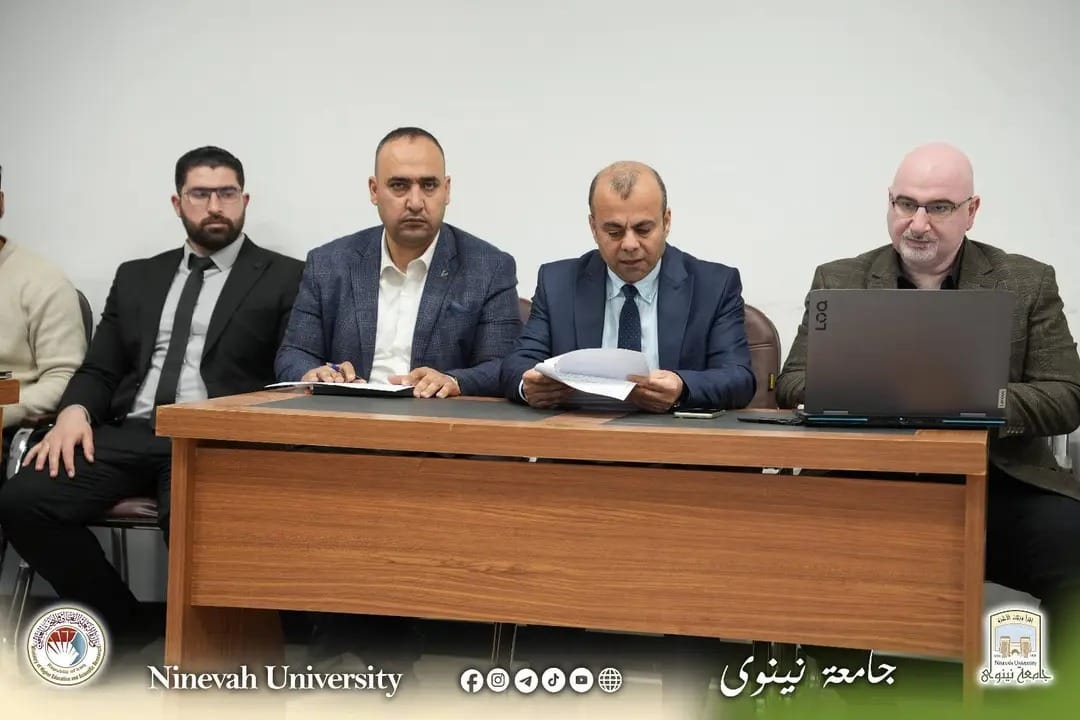
Under the patronage of the President of the University of Ninevah, Professor Dr. Osama Ismail Al-Mashhadani, and under the supervision and follow-up of the Assistant President for Scientific Affairs, Professor Dr. Jaafar Ramadan Mohammed, an expanded meeting was held to discuss the Student Information System (SIS). The meeting was attended by several department and division directors concerned, along with the technical team responsible for managing and operating the system. This comes within the framework of the University Presidency’s commitment to monitoring electronic workflow and developing academic information management mechanisms in line with quality standards and digital transformation requirements.
The meeting aimed to review in detail the process of migrating student data from previous systems to the (SIS), and to verify the integrity, accuracy, and completeness of the adopted data transfer procedures, ensuring the preservation of academic and administrative records without loss or errors that could affect students’ academic progress.
During the meeting, the technical team delivered a detailed presentation outlining the stages of the data migration process, the auditing, matching, and validation mechanisms applied after data transfer, as well as the main technical challenges encountered. These included variations in data formats, system compatibility issues, and matters related to infrastructure and technical support.
The meeting also addressed key obstacles that emerged during the system’s practical implementation. Participants’ remarks and inquiries were discussed, and a number of technical and administrative proposals and solutions were presented to enhance the system’s efficiency, improve its performance, and prevent future errors.
At the conclusion of the meeting, emphasis was placed on the importance of coordinated efforts between administrative units and the technical team, the necessity of continuous follow-up and periodic performance evaluation, and the adoption of best technical practices to ensure data accuracy and expedite procedures. This will contribute to improving the quality of services provided to students and achieving the University’s goals in digital transformation and modern electronic administration, reflecting the Presidency’s direction toward building an integrated digital learning environment.