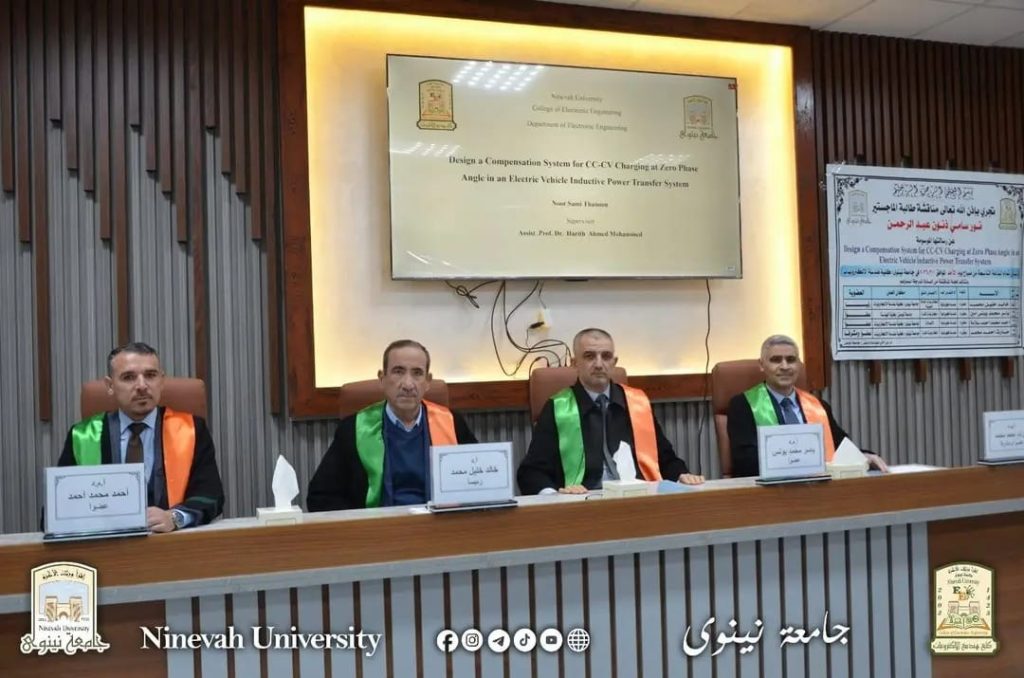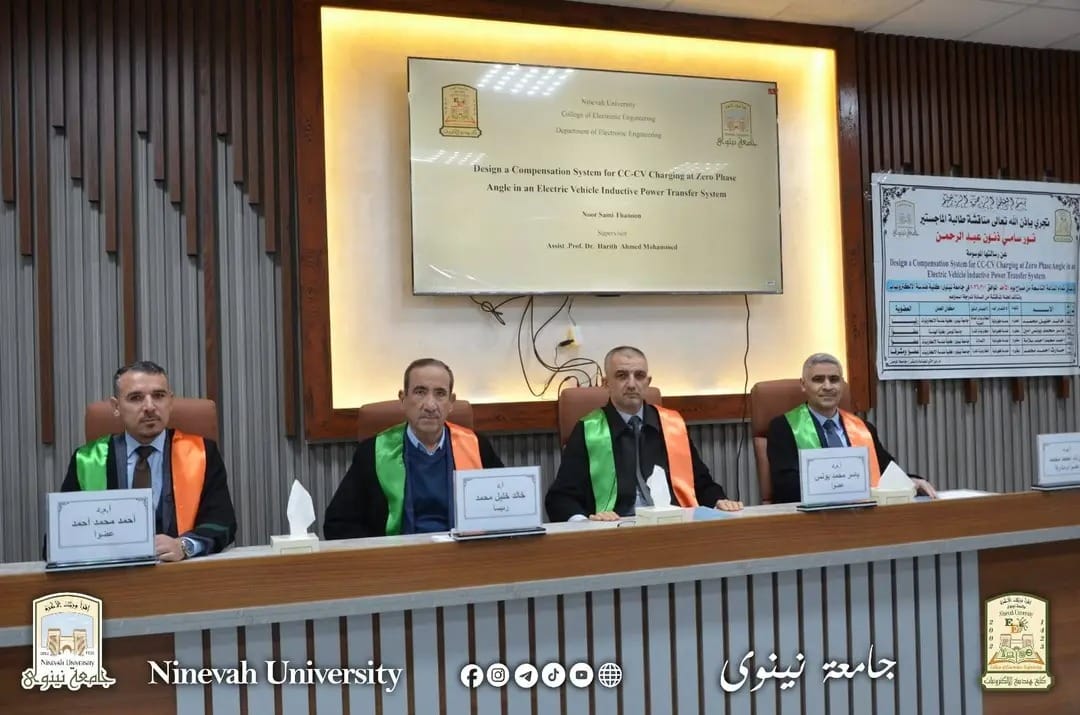
The College of Electronics Engineering at the University of Ninevah witnessed, on Sunday (March 1, 2026), the defense of a master’s thesis entitled:
“Design a Compensation System for CC–CV Charging at Zero Phase Angle in an Electric Vehicle Inductive Power Transfer System.”
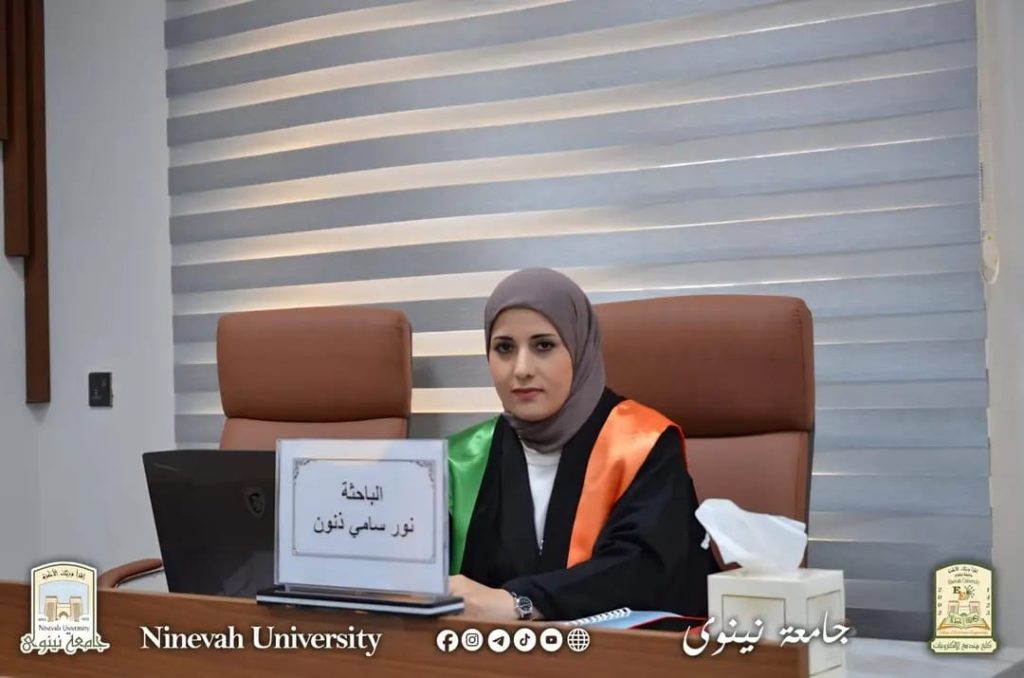
The thesis was presented by the student Noor Sami Dhnoon Abdulrahman from the Department of Electronic Engineering. It addressed the technology of Wireless Power Transfer (WPT) for charging electric vehicles (EVs) powered by lithium-ion batteries, which require both Constant Current (CC) and Constant Voltage (CV) charging modes.
The study focused on analyzing fundamental and hybrid compensation topologies in order to design a hybrid compensation system with a capacity of 3.7 kW across an air gap of 100 mm. Circular coils supported by ferrite strips and aluminum shields were designed using ANSYS Maxwell-3D simulation to concentrate magnetic flux and reduce losses. In addition, MATLAB/Simulink simulations were conducted to verify system performance and stability.
The thesis concluded that it is possible to integrate the characteristics of LCC-P and LCC-S topologies within a unified system for charging electric vehicles while maintaining a Zero Phase Angle (ZPA) throughout the charging process at a frequency of 85 kHz, without the need for multiple resonant frequencies or complex control circuits. This contributes to simplifying the design and improving operational efficiency.
The discussion committee consisted of:
• Prof. Dr. Khalid Khalil Mohammed / University of Ninevah – College of Electronics Engineering (Chairman)
• Asst. Prof. Dr. Yasser Mohammed Younis Amin / University of Mosul – College of Electrical Engineering (Member)
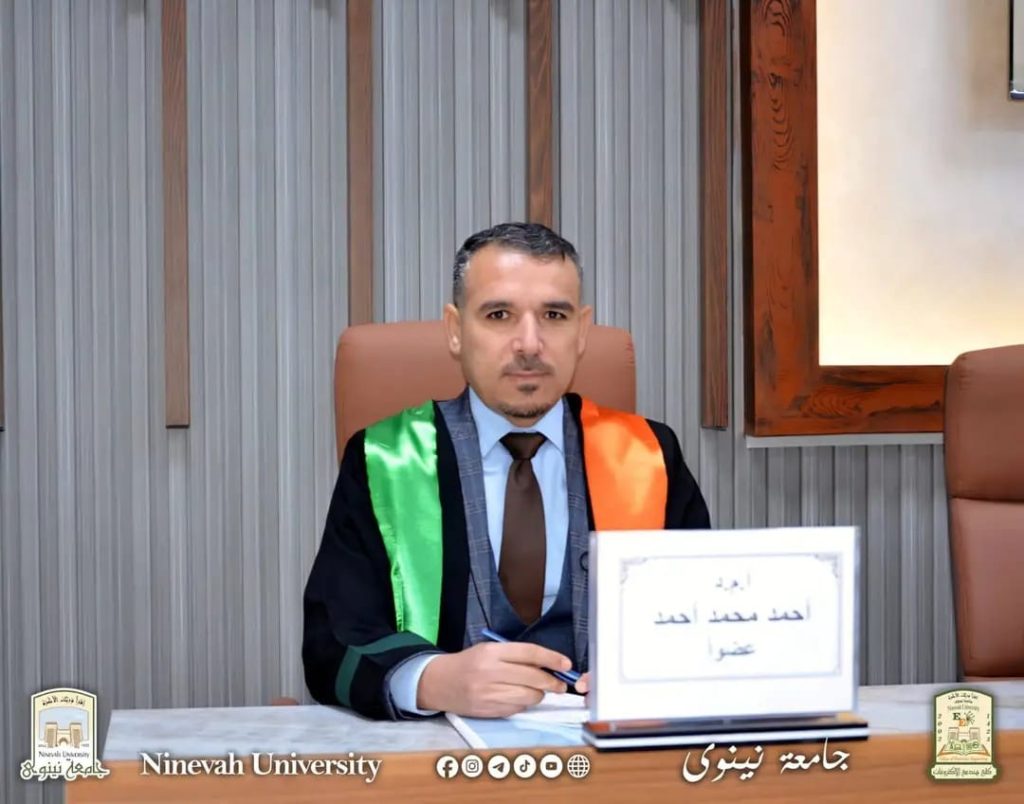
• Asst. Prof. Dr. Ahmed Mohammed Ahmed Salama / University of Ninevah – College of Electronics Engineering (Member)
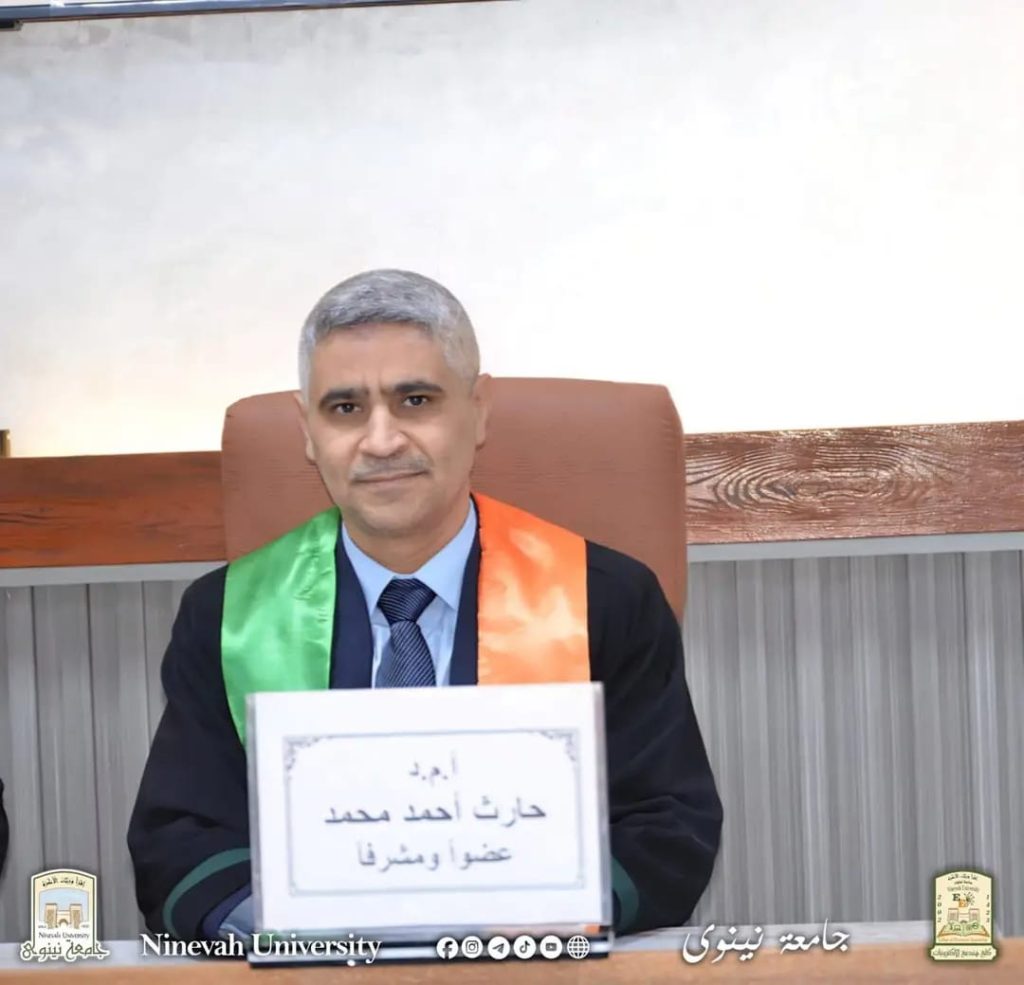
• Asst. Prof. Dr. Harith Ahmed Mohammed / University of Ninevah – College of Electronics Engineering (Member and Supervisor)
This thesis comes within the framework of the University of Ninevah’s efforts to support applied research that contributes to clean energy technologies and the development of smart charging solutions for electric vehicles.