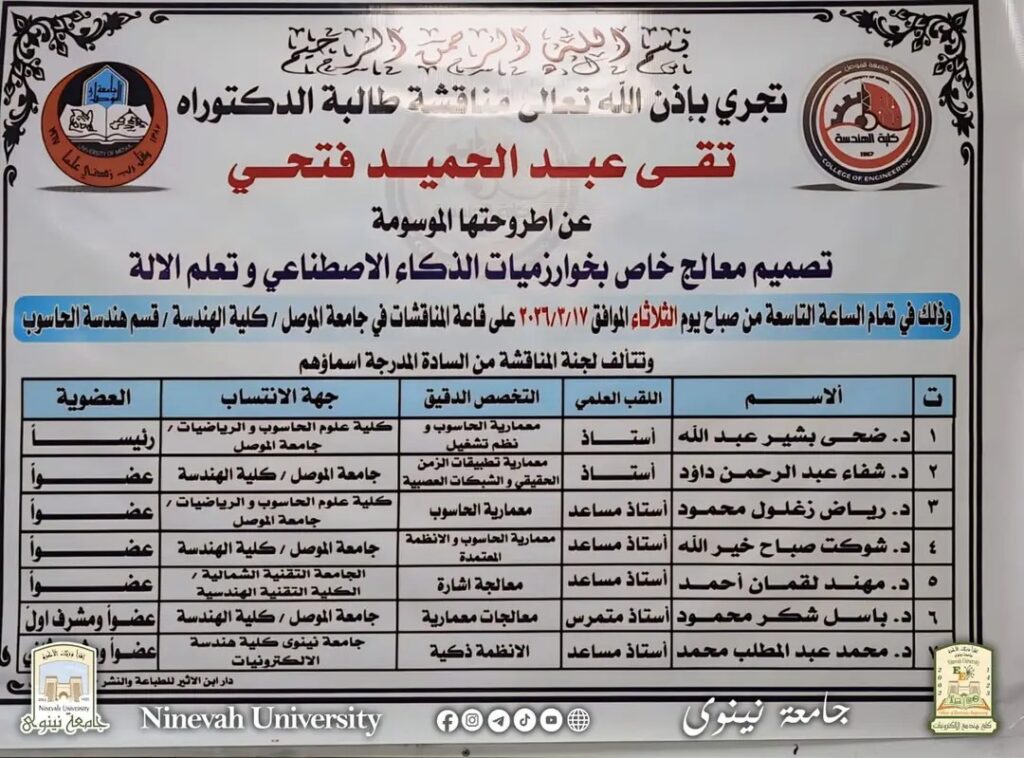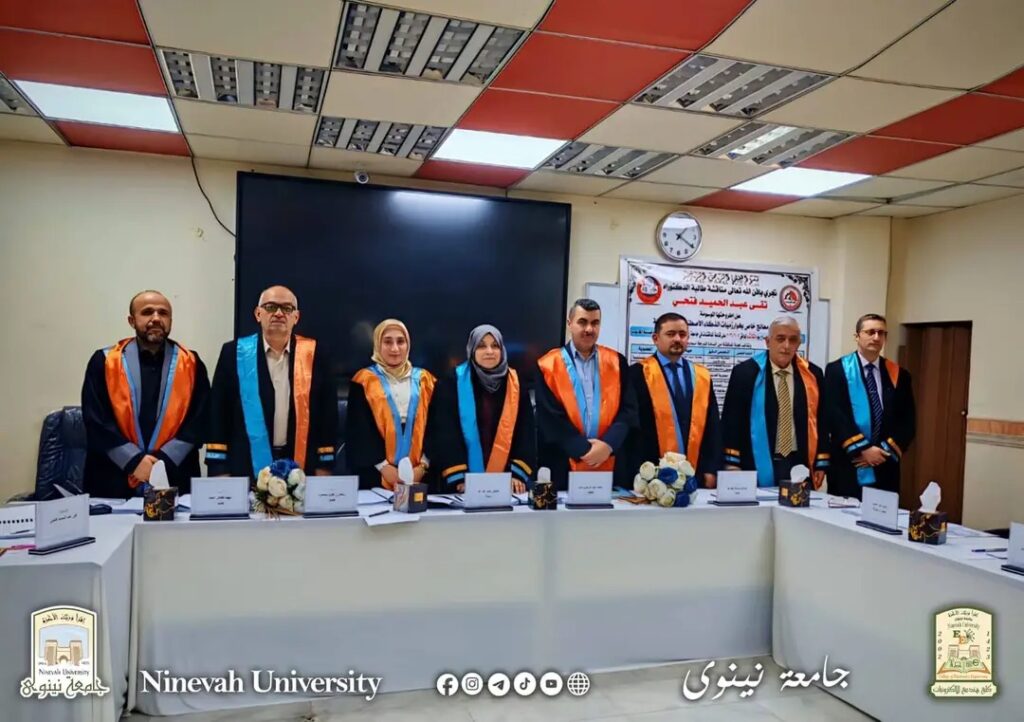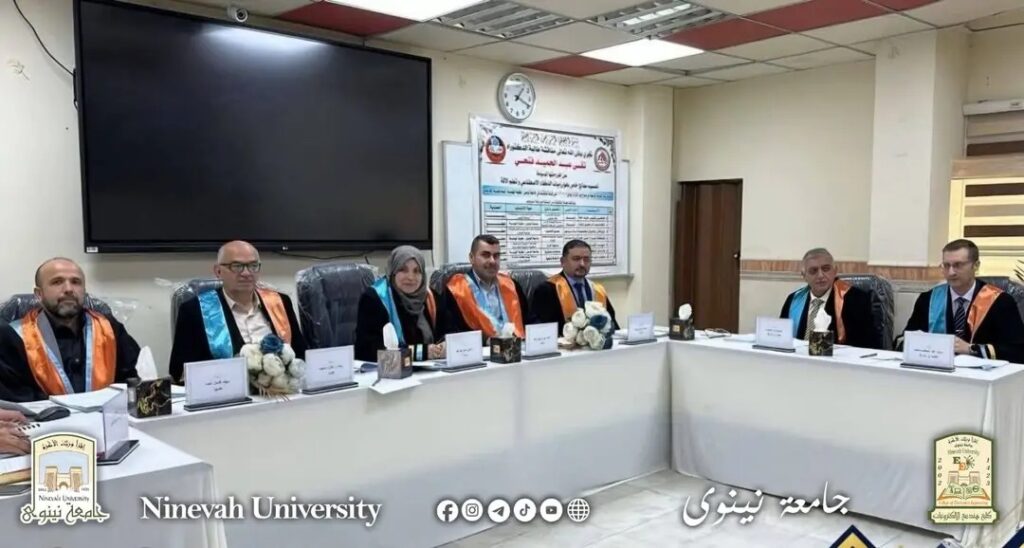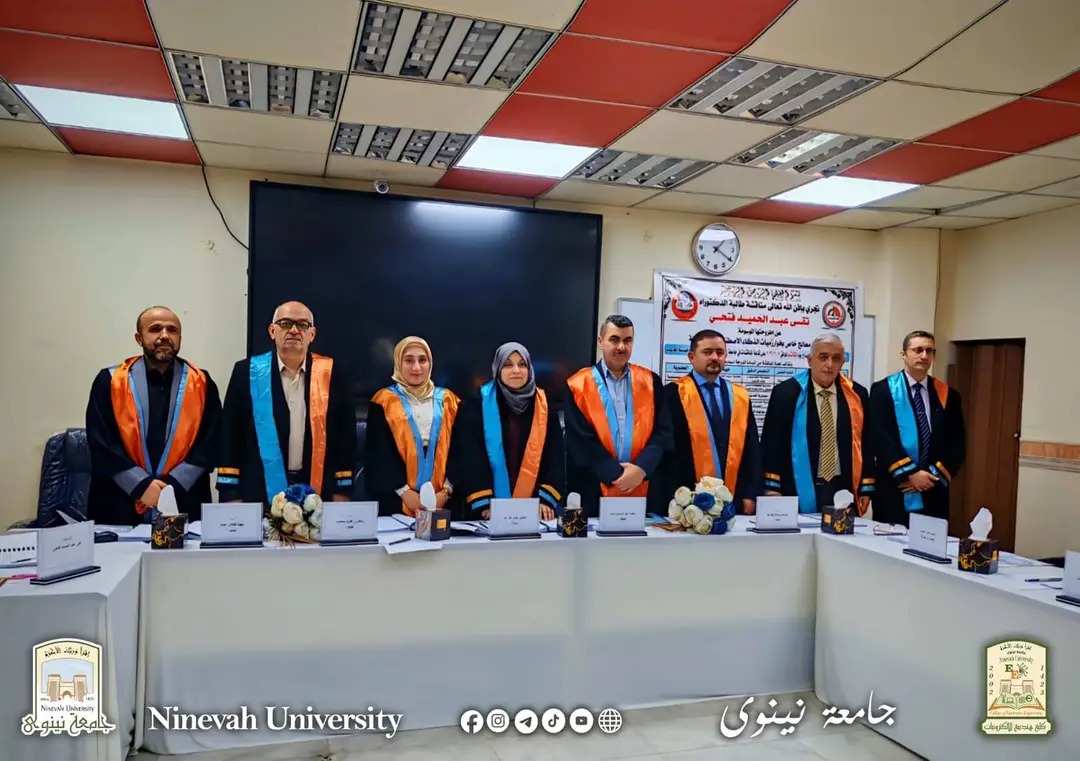
As part of strengthening scientific collaboration among Iraqi universities, Assistant Professor Dr. Mohammed Abdulmutalib Mohammed, Head of the Computer and Information Engineering Department at the College of Electronics Engineering, University of Ninevah, participated as a member and supervisor in the PhD dissertation defense committee at the College of Engineering, University of Mosul.
The defense took place on Tuesday, March 17, 2026, for the candidate Taqa Abdulhamid Fathi, a faculty member in the College of Electronics Engineering / Department of Computer and Information Engineering, for her dissertation entitled:
“Developing Machine Learning Algorithms for EMG Signal Classification using Hardware-efficient Architecture.”
The dissertation aimed to develop efficient algorithms for classifying electromyography (EMG) signals, contributing to applications in human–machine interaction and wearable devices through the design of a specialized processor capable of handling such data efficiently.
The research involved data collection using the Thalmic Myo armband, and the application of several machine learning models, including DT, RF, KNN, and XGBoost, in addition to deep learning models such as LSTM and CNN-LSTM. Their performance was evaluated based on multiple metrics, including accuracy, execution time, and power consumption.
The work also included implementing the model on the Jetson Nano platform, as well as developing a prototype using FPGA technology, enhancing its applicability in real-time, low-power environments.
The candidate, Taqa Abdulhamid Fathi, was awarded her PhD degree after successfully defending her dissertation, with the committee praising the high academic standard and the promising applied results achieved.
This participation reflects the University of Ninevah’s commitment to supporting scientific research and engaging with the latest advancements in artificial intelligence and modern engineering technologies.