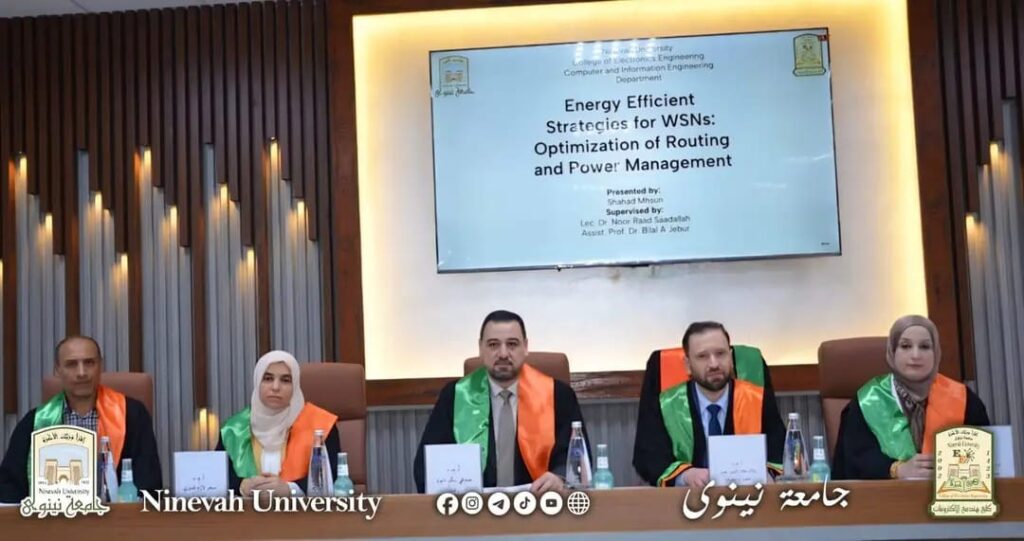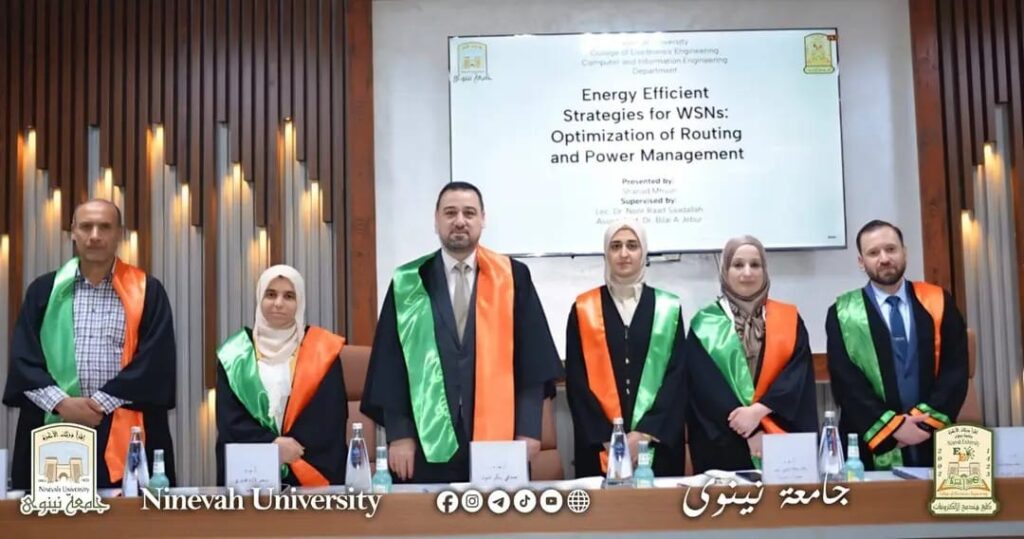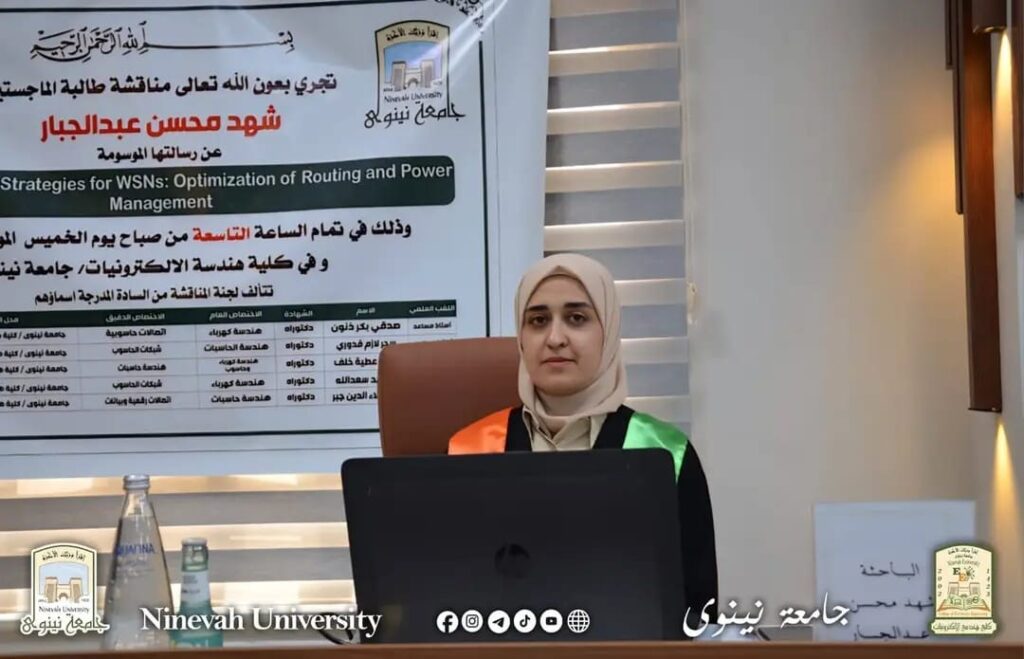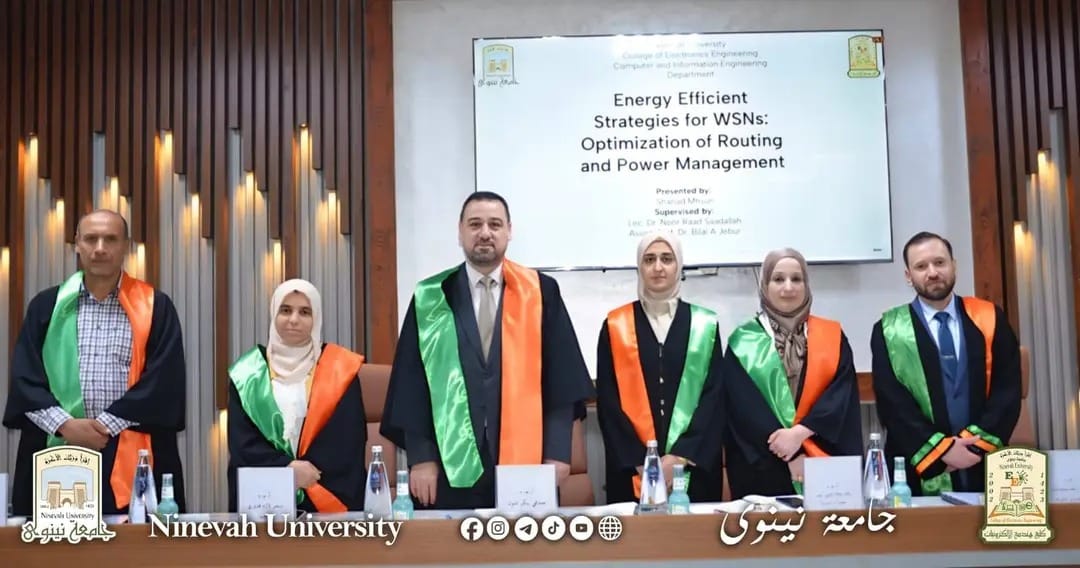
A master’s thesis at the Department of Computer and Informatics Engineering, College of Electronics Engineering, University of Ninevah, presented by Shahad Mohsen Abduljabbar, entitled:
Energy-Efficient Strategies for WSN: Optimization of Routing and Power Management
investigated the development of innovative strategies and methodologies to improve energy efficiency in Wireless Sensor Networks (WSNs) by optimizing routing and power management. The study aims to enhance the sustainability and reliability of WSNs in critical applications such as environmental monitoring, smart cities, disaster management, and precision agriculture.
The research proposes a novel hybrid clustering and adaptive routing protocol that offers enhanced operational performance and extends the network’s lifetime compared with conventional protocols, particularly in challenging environments where battery replacement or recharging is impractical.
The study addresses the challenge of limited battery power in sensor nodes, which directly affects network performance, by introducing two integrated mechanisms. The first combines hybrid clustering with Adaptive Duty Cycling, while the second employs Multi-Hop Routing integrated with data aggregation techniques and adaptive transmission power control.
To evaluate the proposed approach, a simulation model was developed using key performance metrics, including energy consumption, network lifetime, and scalability. The obtained results were compared with well-established standard protocols to demonstrate the effectiveness and superiority of the proposed methodology.
The findings revealed significant improvements in energy efficiency and network stability through the integration of hybrid clustering and adaptive routing. The proposed approach substantially reduced unnecessary energy consumption at sensor nodes while maintaining the required data delivery rate with high accuracy. Comparative analysis further showed that the proposed protocol achieved an optimal balance between extending network lifetime and enhancing scalability in complex wireless environments.
The results confirm that the proposed energy management and routing methodology not only enables long-term network operation with minimal maintenance but also contributes to reducing the carbon footprint of Wireless Sensor Networks, thereby supporting sustainable development goals more efficiently.
The examination committee consisted of:
- Asst. Prof. Dr. Sidqi Bakr Thanoon – College of Electronics Engineering, University of Ninevah– Chairperson.
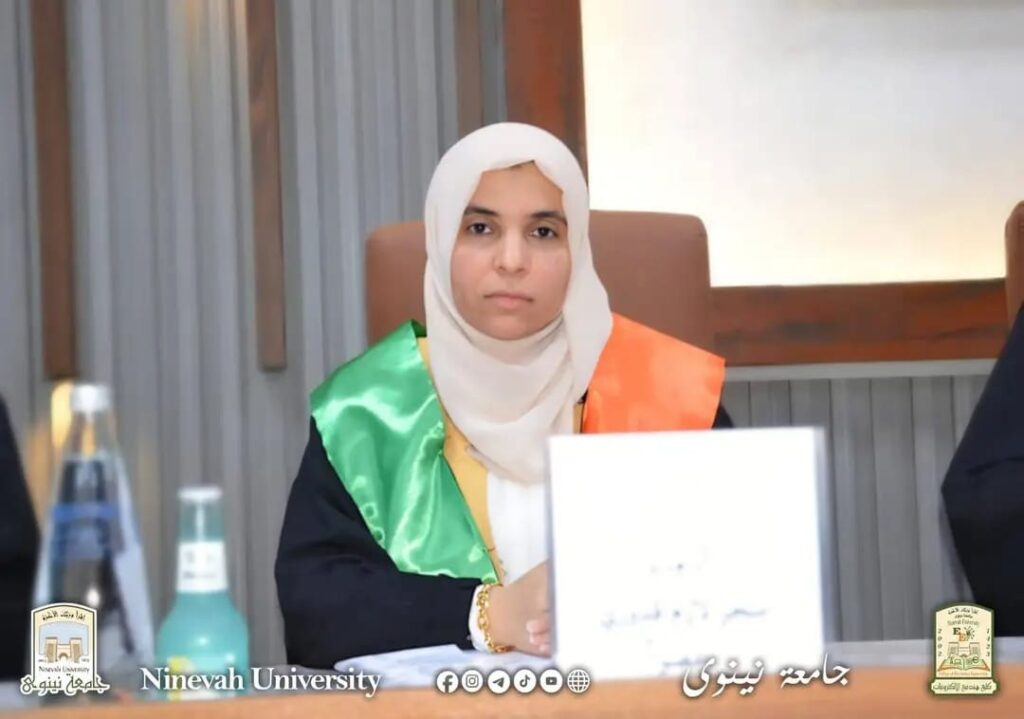
- Asst. Prof. Dr. Sahar Lazim Qadouri – College of Electronics Engineering, University of Ninevah – Member.
- Lect. Dr. Imad Atiyah Khalaf – College of Electronics Engineering, University of Ninevah– Member.
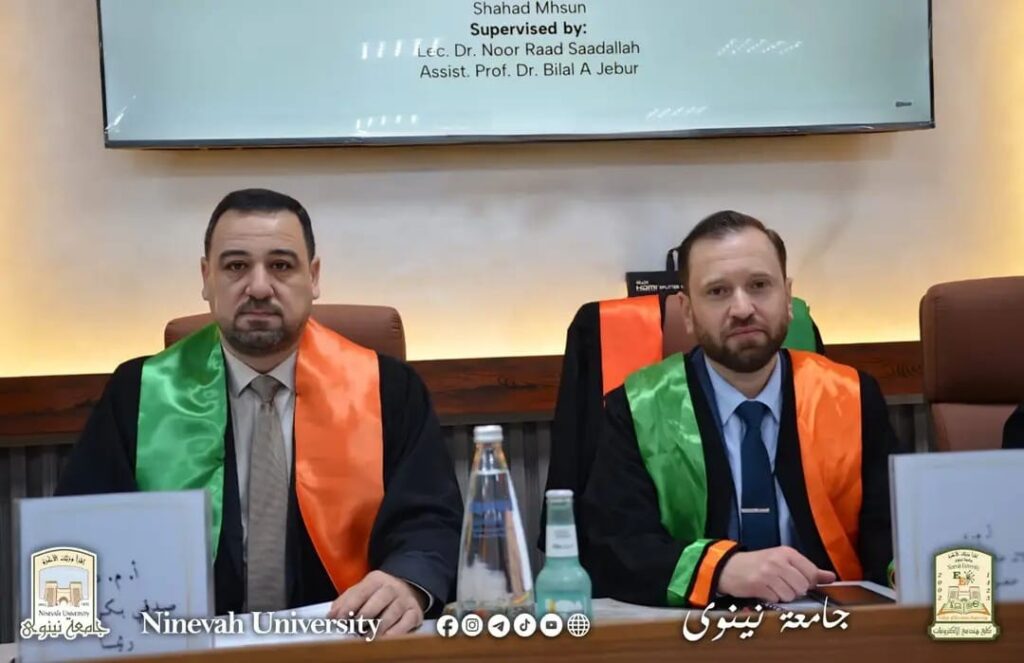
- Lect. Dr. Noor Raad Saadallah – College of Electronics Engineering, University of Ninevah – Member and Supervisor.
- Asst. Prof. Dr. Bilal Alaa Al-Din Jabr – College of Electronics Engineering, University of Nineveh – Member and Supervisor.
We extend our sincere congratulations to the researcher and the members of the examination committee, wishing them continued success and academic excellence.