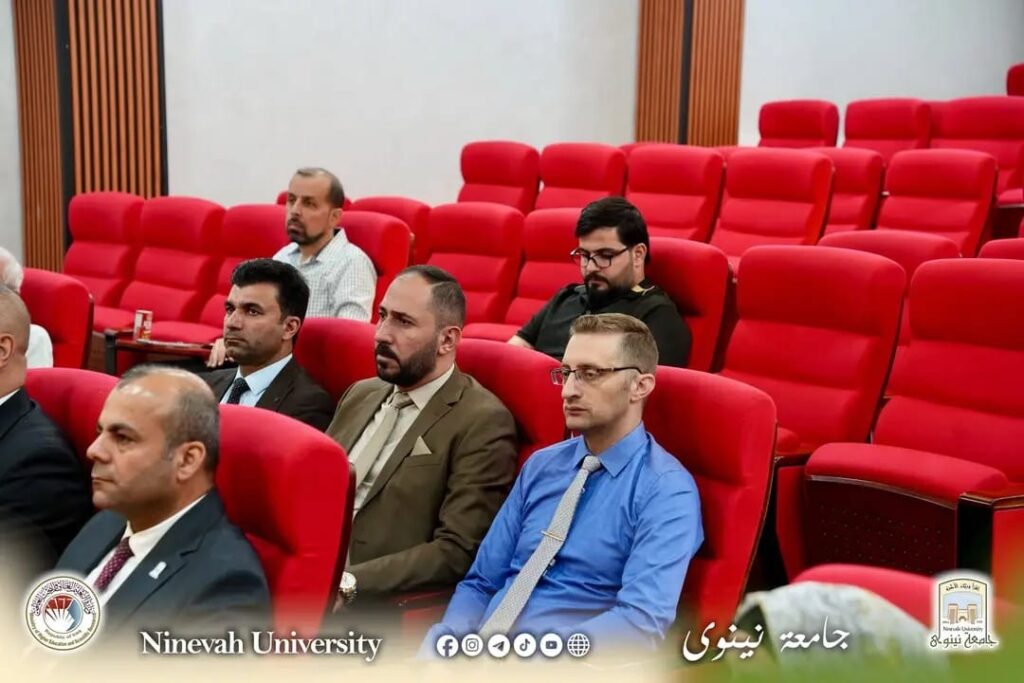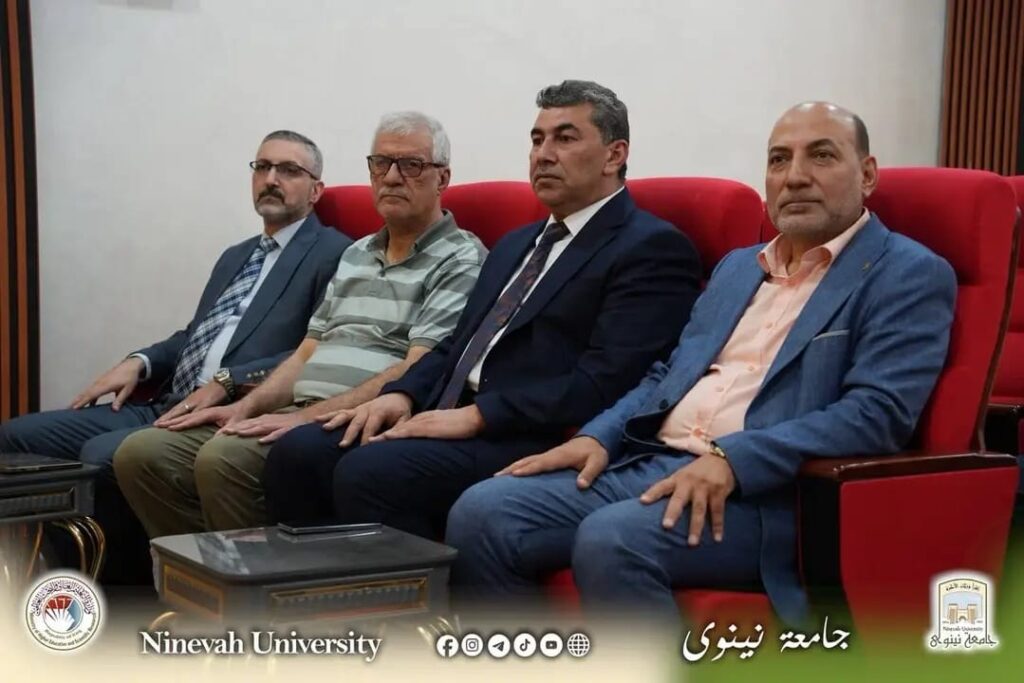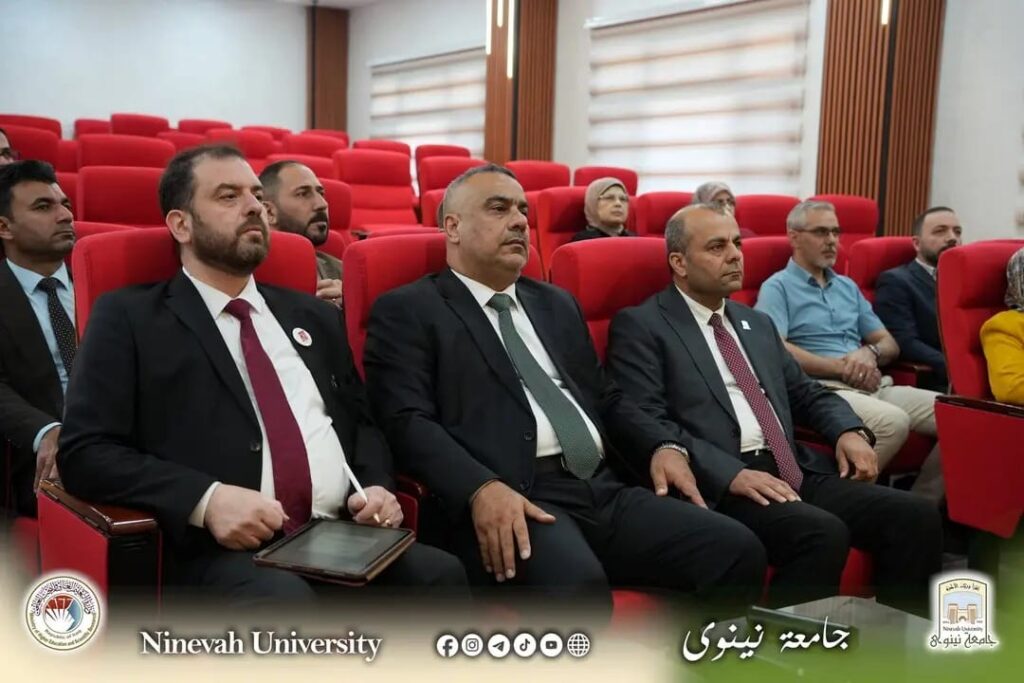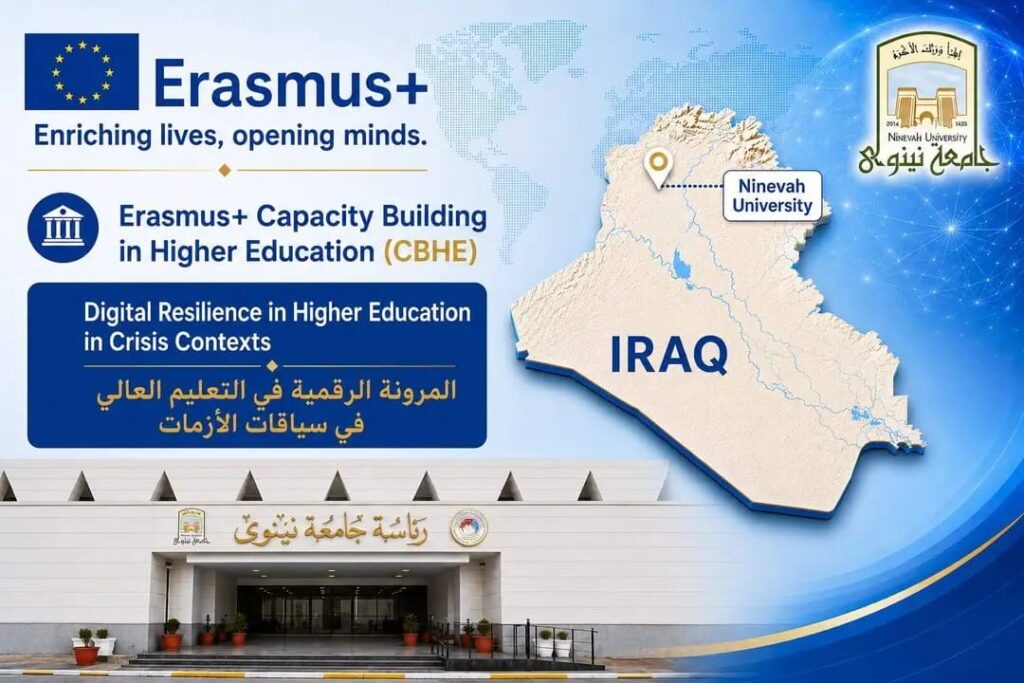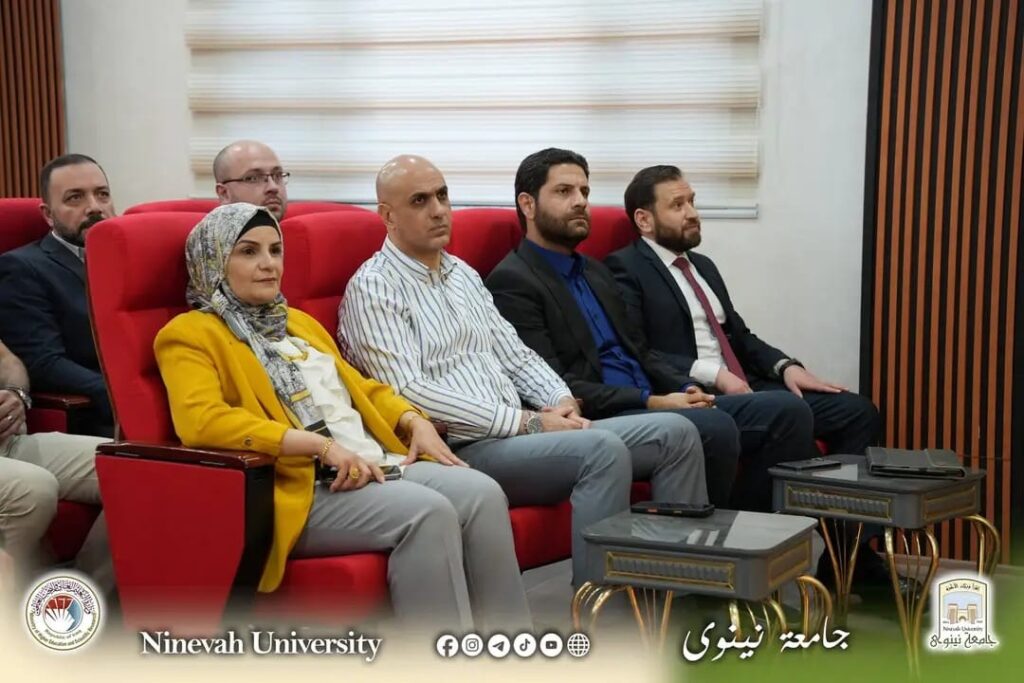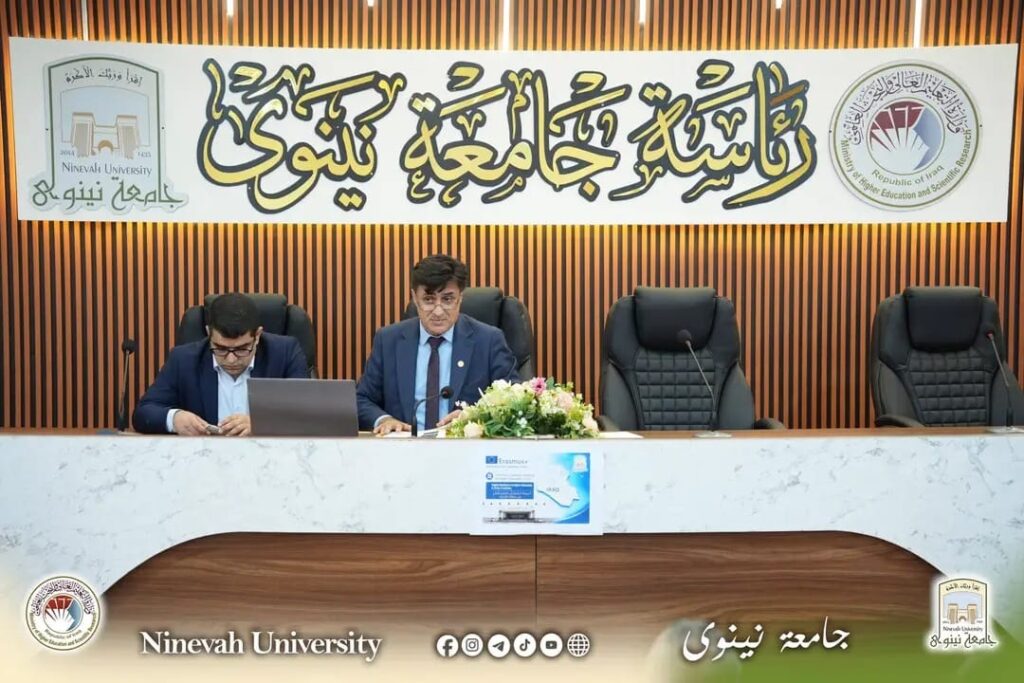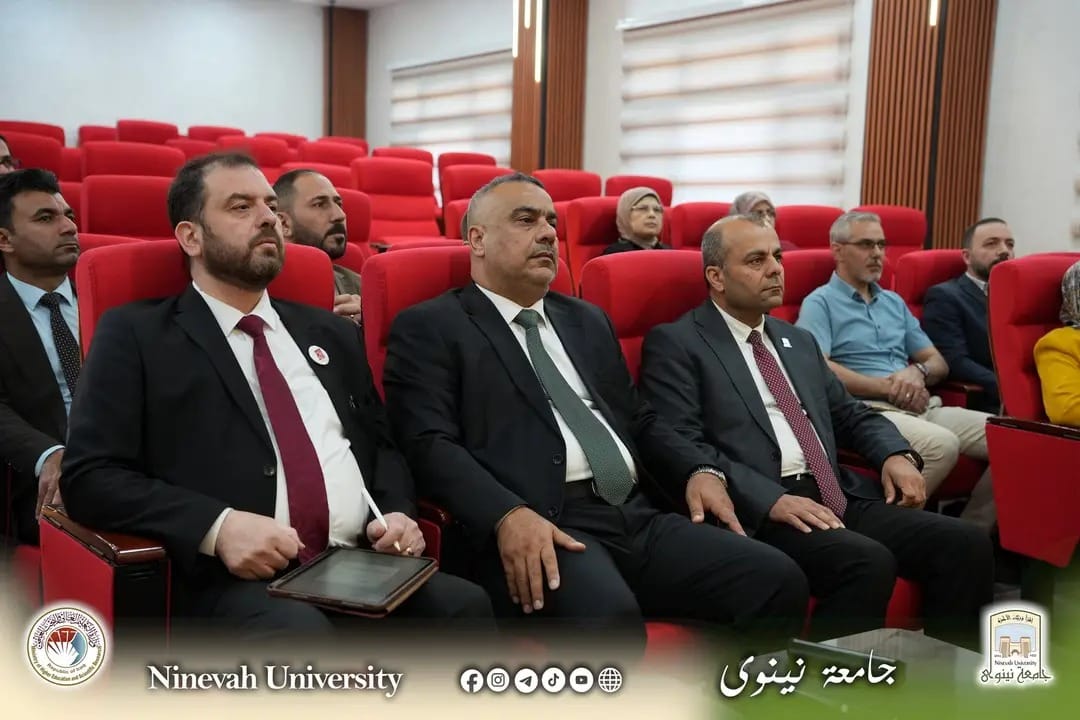
The Department of Scholarships and Cultural Relations at Ninevah University held an introductory workshop on the Erasmus+ Programme, aimed at introducing the programme, its pathways and mechanisms for accessing its opportunities, while highlighting its role in strengthening international academic cooperation and building university capacities.
The workshop featured three main lectures. The first addressed the concept, objectives, types and pathways of the Erasmus+ Programme, as well as participation and application requirements and the opportunities it offers to universities, students, academic staff and researchers. The lecture was delivered by Assistant Professor Dr. Laith Rabih Al-Soufi.
The second lecture focused on the Digital Resilience in Higher Education in Crisis Contexts project, which Ninevah University was selected to participate in under the Erasmus+ Programme. Dr. Sarmad Fakhr Al-Din Ismail presented the project’s concept, objectives and components, highlighting its role in promoting the continuity of education and learning during crises through the use of digital solutions and low-connectivity education.
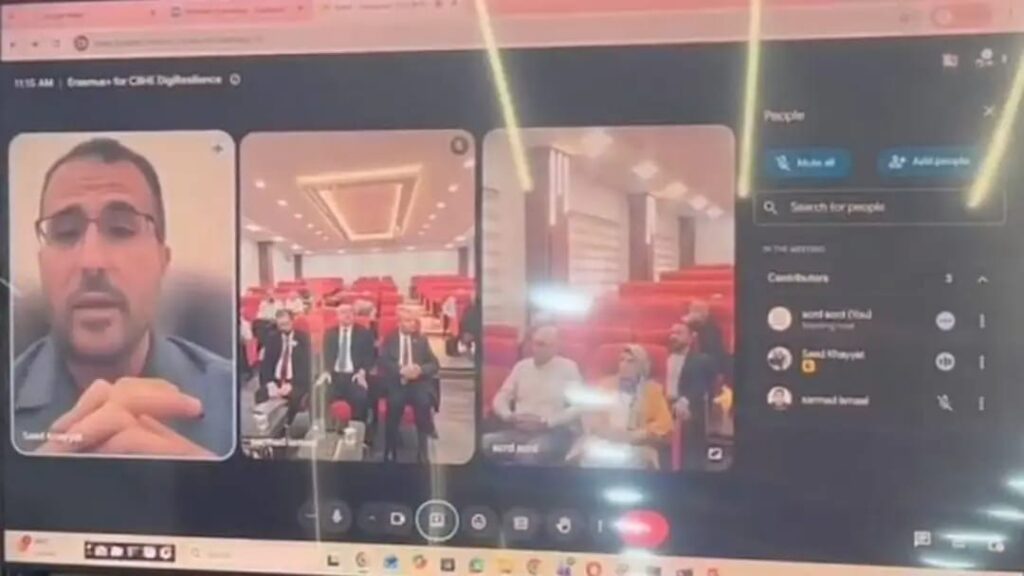
The workshop also featured a presentation by Professor Dr. Saed Al-Khayyat, Adviser to the President of An-Najah National University for Education Strategies and Projects Development and the university’s representative in the project, entitled “From Crisis Response to Digital Resilience: Rethinking Higher Education Continuity.” The presentation highlighted An-Najah National University’s experience in developing flexible models for ensuring educational continuity, as well as the role of digital transformation and international partnerships in addressing crises.
At the conclusion of the workshop, Professor Dr. Osama Ismail Al-Mashhadani, President of Nineveh University, welcomed the distinguished guest, commending the depth of the academic relations between Ninevah University and An-Najah National University. He also underscored the importance of international and Arab partnerships in advancing scientific cooperation, facilitating the exchange of expertise, and opening new horizons for joint academic initiatives.